Act I
I'm knee-deep in snow here. Not literally, of course-- I'm sitting snug at home in my lovely apartment, surrounded by comforting possessions, crocheted blankets, religious artifacts, and soothing colors. Why am I writing again? Since my last post, I've been in therapy for some months, and have made a good deal of progress. Now, I don't have many friends where I live. I'm isolated, emotionally and mentally, although I've been working on that of late, taking several opportunities to go out on tentative social dates with people from school, work, or church.
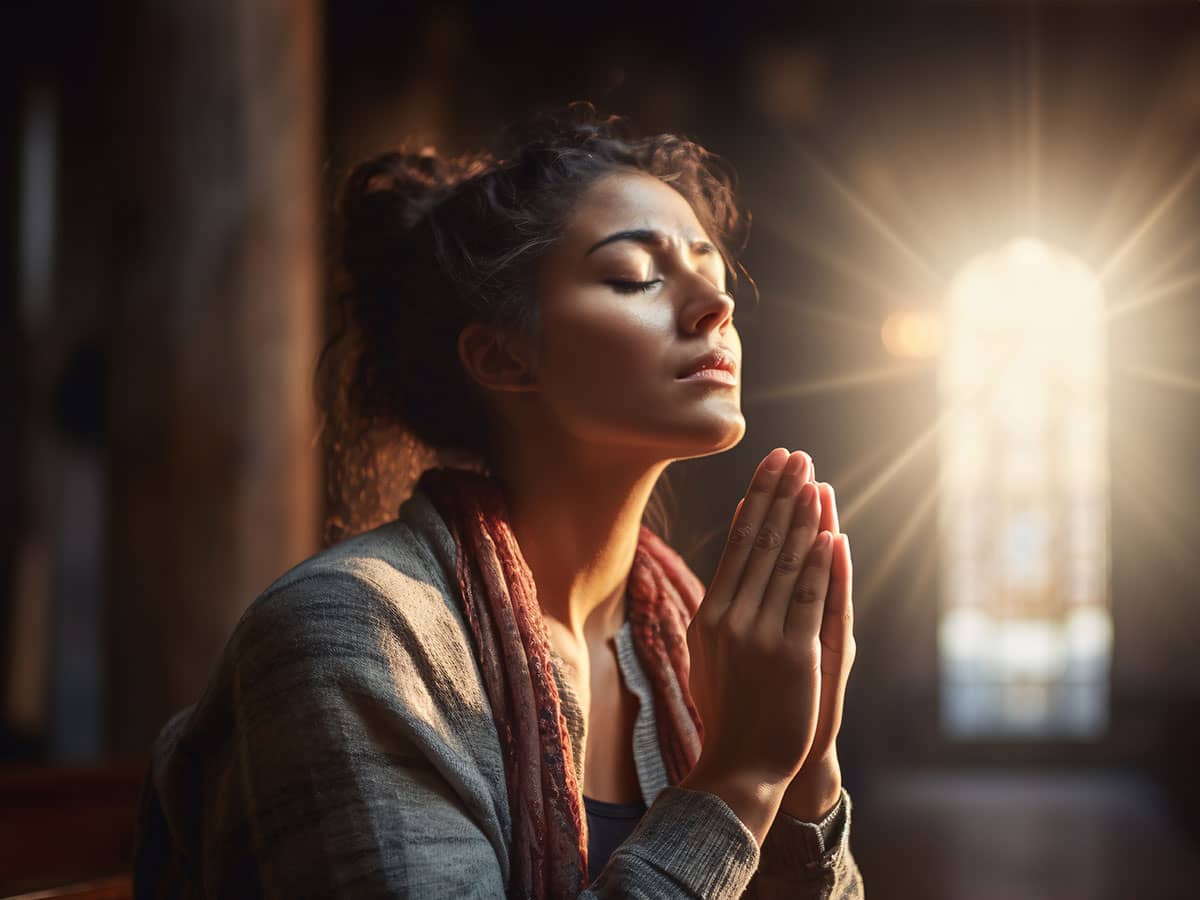
Church. I've been attending a Unitarian Universalist church for several months, too. It's a tremendously welcoming place. Every Sunday so many people come up to me just to say hello and let me know they remember who I am and value my presence there. It isn't perfect. The sermons are lackluster and rambling. The demographic is almost exclusively middle aged, upper middle class Caucasians. All that means, though, is that the church needs young, dynamic people to help shift its priorities. I am by no means intending to charge in and propose a revolution among the masses; but I can do my part to help attract other people my age (twenty-something) to UU.
And why? Why UU? Because there's a growing divide of youth in America-- a shift in emphasis between charismatic, fundamentalist faith and spiritual-but-not-religiosity. I certainly favor the latter. But how can we, the spiritually ungrounded, stand against the great masses of popular opinion...
Well, no. That implies some sort of grand Manichean divide. Let me approach this from another angle: Empathy must become the ethical framework of the future. Empathic ethics demand that we acknowledge the existence of the human in all others, that we are both alike and dislike others. Jeremy Rifkin holds that to be truly empathic, you must first know that you are a self. Then you can recognize that others, too, are selves. The self, according to Judith Herman, is generated by community; family, friends, culture. It is not monolithic. It is partially physical, partially emotional, partially mental, partially all these things.
The way forward is not to say, we are all physically different, but we all have the same soul. The way forward is to say, we are all physically the same. Same blood, same heart, same sweat, same emotions, same fears. Our similarities are greater than our differences.
What of our differences? I am not currently equipped to comment on most major cultural differences. For now, and on this site, I will comment on religious difference. As a part of culture, religion provides a metaphoric or mythic framework of meaning; a way to interpret and collate data; a story. If your religious story-- if my religious story-- is preventing you from empathizing, from recognizing the human in either yourself or in others, you and I must radically change our story. UU, I believe, has the seeds to begin this process of communication. If only it were a more diverse religion!
My vision for UU is for it to be a meetingplace of spiritual ideas; as it stands, the plurality of my church is secular humanist, most of whom are already dedicated to liberal social causes. That aspect of community building is good, but it neglects the vast melting pot that UU should represent. Within UU, we should see people who are Unitarian Universalist-- and Christian. Unitarian Universalist-- and Buddhist. Unitarian Universalist-- and Muslim. Within UU can be a crucible for the radical transformation of faith; a moulding of traditional faiths; a place where empathy can reign in the midst of difference. What I see, hopefully not for lack of vision, is a place of sameness; a place where everyone already agrees.
Act II
One year ago I put on a pentacle in an attempt to further connect with my deeply spiritual and deeply pagan wife. Since then I have made it halfway through both an online course (the Church of Universal Eclectic Wicca) and a weekly discussion group/class in a local eclectic Wiccan coven. I don't feel as though I'm making any progress at all.
The problem is that I don't believe in magic. Sometimes, however, I adhere to magic.
I've set up this (possibly artificial/superficial) distinction to deal with two contradictory impulses in my spiritual life. I am a deeply skeptical person; when I hear about miracles, gods, spirits, psychics, the supernatural of all kinds, my warning flags immediately go up. Maybe I'm jaded after searching for evidence of the supernatural since my childhood, only to turn up a bunch of frauds, hucksters, and profiteers.
Allow me to go off on a tangent: These people make me actively angry. Misinformation is so widespread in our society. This state of affairs is preposterous! We have incredible access to information technology, yet what gets spread boils down to easily-digested claptrap. Antivaccination, creationism, moon hoaxes, psychic frauds-- my blood boils with the very thought of these people, who delude a society that is not gullible, but merely human. Most people are simply too busy thinking about their jobs, their families, the immediate situation or even global situation to devote much time to sifting through what is true about issue that do not impact them on an immediate level. Yet many of these issues do. Should I get my kids vaccinated? Should we include Intelligent Design in our textbooks?
Most people are looking for answers they can attach to the ongoing story of their lives. Stories that make you feel good about yourself are likely to attach moreso than stories that don't.
(I'm ranting here; this is all my own brand of unfounded guff; I have no idea if this is why, psychologically, people fall for fraudulent claims).
Act III
I'm coming to the end: The jumble above is barely worth reading. But I should really summarize my interior life of late:
I get lonely and depressed on an almost daily basis. It's not to level of clinical depression; I still function perfectly well. But my sense of selfhood is eroding because I have no community to support it. Erin and I have been communicating much better of late, and I'm working on communicating my feelings more openly.
I have discovered, in therapy, something very relevant to my development, and the way I deal with the world. I really do hate to blame anything on my parents; it's an easy cop-out, and I don't think I could have asked for better. However:
While growing up, my parents would rarely tell me straight out what they believed I should do in a given situation. I was asked to choose between Montessori and public school; given great leeway in making choices about college, driving, etc, all through my early development and adolescence. They would advise me, certainly; but were not always forthcoming about their own beliefs in the matter. This has had some interesting consequences. I developed an empathic ability to sense what other people are feeling, primarily because I did not feel capable of making decisions on my own, and wanted guidance. Because others did not tell me outright what I should do, I had to guess what they thought. As a result, I am very tuned in to what others around me are feeling. However, I am also very inward focused (just add up all the "I"'s in this post). Others' emotions effect me primarily as they relate to me, to what I should do. Furthermore, any disapproval from others is devastating to me-- and because I'm hyper-sensitized to others' emotions, I can often imagine or percieve disapproval where there may be none.
That, I believe, is partially (emphasis: partially) why I shrink from public interaction. I don't live up to my own expectations, and often don't really have any vested interest in a given activity. I merely think someone else values it, and wants me to be part of the process. I can very easily take up the project, knowing that my involvement will at least make someone happy. Because I don't actually have an investment in it, however, I don't follow through, which leads to disappointment, which leads to intense demoralization and depression. These feelings pull me into further isolation, to protect myself from the cycle.
The above is a hypothesis, of course; it is descriptive, and binds together a lot of my behavior into a comprehensive theory. So how do I recover? How do I feel comfortable making my own decisions? Even now I am criticizing myself for even thinking my problems are problems. Imagining criticism from a community I hardly belong to, judging me and calling me selfish. Not everyone has to be traumatized to be incapable of interacting with society, however. I belong to a class of society who has no trauma, no diagnosed disorder, but who is nonetheless deeply toubled emotionally. I can't deny that.
OK-- so with that out of the way, there are also many things I've been enjoying in life, but maybe this isn't the post to discuss them. Next time: Mask-making, documentaries, human rights, baby-discussing, fun with beer, being married, and a bunch of other stuff too long for a facebook status update.