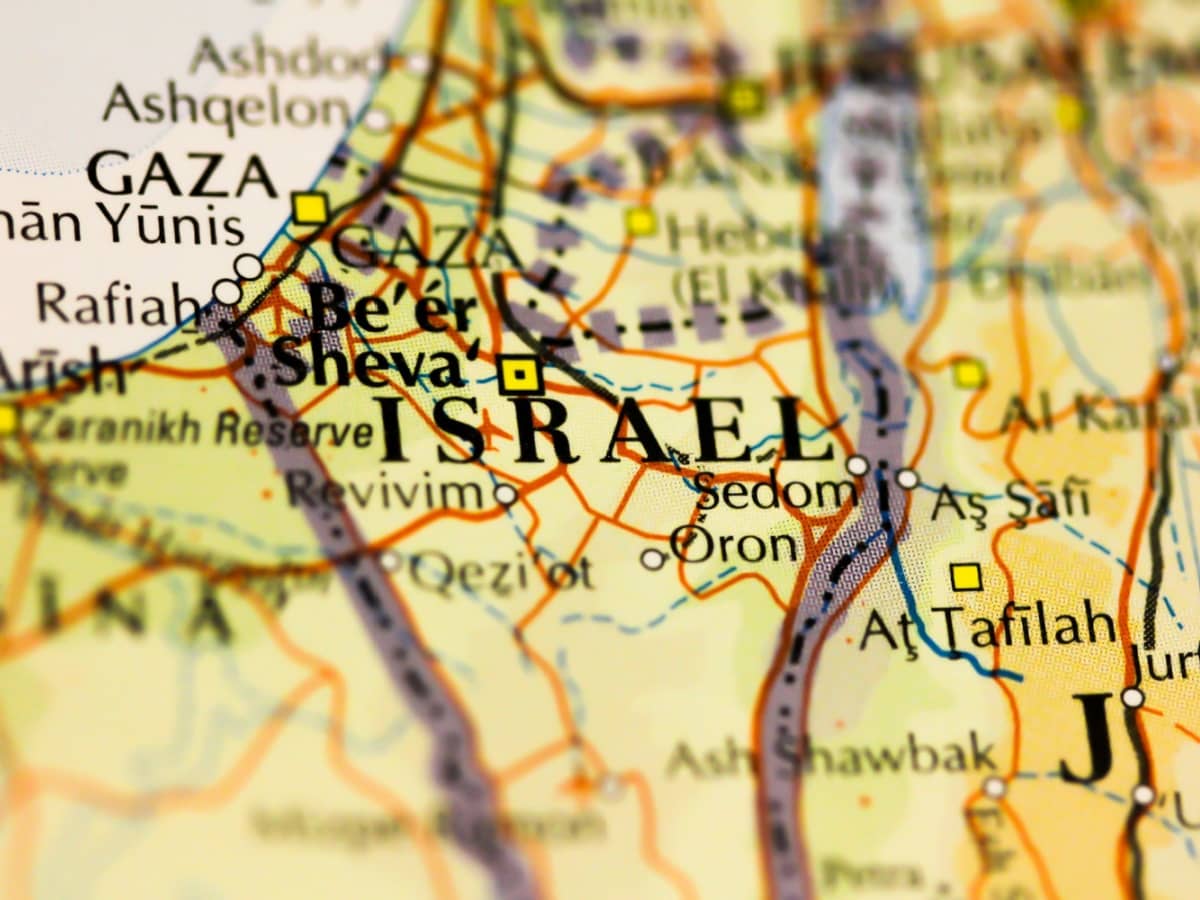
In 1947, following World War I, the United Nations partitioned Palestine into two states--one Jewish and one Arab. In ancient times, Israel had been home for the Jews but they were exiled long before the time of their contemporary return to the land and their subsequent declaration of an independent Jewish state. Israel’s Arab neighbors resisted the partition plan from the beginning and some still question the state’s right to exist. The dispute involves complex political, social and religious issues, with both sides using the word of God to justify their position.
On the Israeli side there is the belief that God promised the land to the Children of Israel. Scripture tells us that God promised Abraham that he would be a father to many nations and that his seed would possess the land everlasting. God’s subsequent promise to Israel that his seed would possess the land does not supersede God’s promise to Abraham. With Israel and his seed after him, God made a covenant that He would favor them above other nations and that He would establish prophethood and revelation among them. The covenant required of them that they would adhere to what God has revealed to them and that they would spread God’s message to all the nations. Some of them adhere to the message but many of them pursued the wrong course. They claim the message was intended for them alone. And they drive other descendents of Abraham from the land that was promised to all of them.
God chose Jesus from among the Children of Israel and strengthened him with the Gospel. Jesus reminded the Children of Israel of their covenant with God and attempted to right their course; they rejected him and his message. God chose Muhammad and strengthened him with the Holy Qur’an. Muhammad also reminded the Children of Israel of their covenant with God; they also rejected him. But while Jesus was sent only to the Children of Israel, Muhammad was sent with a message to all nations—a message that will endure until the end of time.
The religion of Muhammad was the same as that of Abraham, Ishmael, Isaac, Jacob, Moses, and Jesus: surrender to God’s will. The Holy Qur’an confirmed the truth of what remained of earlier revelation but replaced some of what was old with something new. But, as did all prophets that preceded him, Muhammad believed in God, the angels, revelation, and prophethood. All of them were true in faith; each bowed his will to God’s; none of them joined partners with God. Those who reject the message of the Holy Qur’an reject an obvious truth.
On the Arab side there is acceptance of God’s promises and an understanding that God did indeed choose the Children of Israel for a covenant. Some of them say that the Jews have fallen short of their covenant with God and therefore fall short of God’s promise. But God tells us in the Holy Qur’an that He will fulfill His covenant with the Children of Israel and expects them to fulfill the covenant as well. God chose the Children of Israel because their fathers were foremost in faith. God’s promise to their fathers will not fall short.
A Muslim always looks to the example of Prophet Muhammad. God proclaimed to Muhammad that his duty was only to convey the Message and not to guard over those who might reject it. It is for God alone to call to account those who reject the message and rebel against God’s law. God has given us a mandate to fight them if they have driven us from our homes but not to fight without due restraint. A believer never closes the door to peace and neither will a believer do anything that would cause others to close the door to peace. And God is One, Eternal and Absolute.
371d36d75e05eda735858f8e467be99c