Visiting Earlham

    Thursday, August 11, 2011, 10:25 PM [General]

    I'm currently sitting in my bedroom at the Brethren House, just across the street from the Earlham School of Religion.  Tomorrow is the Open House for prospective students.  I'm excited!

    Richmond, Indiana has some beautiful neighborhoods, from what I just saw yesterday.  My two concerns in coming here for school in fall 2012 is lack of on-campus housing available for seminary students and that hospitals for my Clinical Pastoral Education units are not very many or close by.

    On the other hand, Earlham is my number one choice right now because of the Quaker foundation of religious education, the depth of the classes offered and their program for pastoral care already assumes that some students will be looking for a one-year residency in Clinical Pastoral Education for their certification as chaplains or pastoral counselors (and I'm assuming that means the school is prepared to support those students).

    Louisville Seminary is currently my number two choice, only because I've been thinking lovingly of Earlham for months now and I've only recently discovered Louisville.  The Presbyterian seminary in Louisville offers advantages over ESR: namely the two points against Richmond.  Louisiville not only offers on-campus housing, it is also in a large metropolitan area (tempered by gorgeous parks and some great restaurants) with hospitals nearby.  

    On our way home to North Carolina on Saturday, the plan is to drive to Louisville first and walk through the Louisville Seminary campus.  While Earlham is fresh on my mind, I hope to develop some questions comparing or contrasting the two options.

    I intend to apply to both, in the off chance that the divine creative force sends me a message by letting me into one and not the other.  If I get into both...well, then I'll be praying and doing my little pros/cons spreadsheets and drawing meditative journal entries...and, uh, getting stressed.  

    If I don't get into either?  

    Then, I'll evaluate how my academic and personal spiritual formation is progressing with the foundational classes I'm taking at the undergraduate level during the next year.  And if I still feel that studying religion is my calling, I'll pursue the scholarly route and seriously consider masters programs in religion.  I'm especially interested in the comparative religion degree offered through the graduate school at Western Michigan University. 

    In the meantime, I've found a Unitarian Universalist fellowship near by and I'm hoping to become more active in their congregation.  From that, maybe I'll find new directions, new ideas, new passions.

    There's always the possibility that I'll stay in my little hometown, take a modest job as a receptionist somewhere, and express my "pastoral care" urge by working more closely with the UU community here.  

    But I have this itch to relocate and start fresh and challenge myself (and my narrow expectations) by doing something new and adventurous!  

    Ho hum.  Time for bed.  One thing at a time.

    Tomorrow, Earlham.  :)

    (I'm so excited!)

    0 (0 Ratings)

    Overwhelmed and Being OK

    Wednesday, August 10, 2011, 4:43 AM [General]

    I haven't written because I've had too many things in my head screaming to be written about.  I'm reading all over the place, literally and literarily.  I'm obsessing about classes coming up, a trip to visit Earlham this week, and also researching other possible seminaries...all while questioning and challenging my own personal beliefs.  Oh, and looking closer at my intention to pursue clinical pastoral care.  Yet one more challenging set of questions, answers, and more questions to balance.

    And the worst part of it all?  I'm stuck in neutral!  I want to be doing something towards practical, real steps, even though I know that this time to discern, consider, and question, is very important.  And I understand that I'll be doing this forever and my answers to my own questions may change.  

    And that's OK.  

    I just wish the rest of me felt that OK.

    3.7 (1 Ratings)

    Graceful Humility

    Thursday, August 4, 2011, 5:36 PM [General]

    I am a book juggler.  As a reader, that is.  I prefer "juggler" to "starter," because that would suggest that I don't finish many books, but I do.  Just not immediately after beginning them.

    The book I've most recently begun, though, managed to arrest me.  Kate Braestrup's Beginner's Grace (2010) is so fantastically wonderful.  Each chapter is so well written, funny, sweet, and honest...and thought-provoking.  I have multi-colored paper flags stuck between the pages of the first half of the book.  There are so many things in there that I wanted to write about here!

    The chapter that finally screamed, "Stop! Read me slowly!" was Chapter 7 "In Praise of a Little Hypocrisy."  In a previous post I admitted that I should be prepared for my thoughts and ideas to change on this journey.  Well, Braestrup gave me a significant PAUSE.  

    One idea that I eagerly grasped in all this is the "walk the talk" concept.  I know / knew that we are not perfect.  We're human.  Not perfect.  But we are (OK, I am) quilty of slipping so quickly and easily into finger-pointing whenever anyone who talks to loudly is found to have strayed from their walk.  The idea behind that (I assumed) was that it was preferrable if more people did successfully "walk the talk."  

    Let's think about that.  Braestrup forced me to think about that.  Her point?  What IF we all walked our talk?  I think we would have killed each other off a long long long time ago.  Not a good thing.  

    She quotes both the Koran and the Bible and both holy books' descriptions of how "good" Muslims or Christians/Jews are to treat nonbelievers (the Biblical reference she uses is Deuteronomy 13:6-10).  Basically, there'd be none of those "good" believers left by now.  I believe the nuclear age term is "Mutual Assured Destruction" or MAD.  Yep.  As in, insane.

    Her point?  Aren't we glad so many of us are hypocritical?  

    In addition to making me go "hhhmmmmm....," I could taste what must be humility in the back of my mouth...

    I shall endeavor to think more and criticize less.


    0 (0 Ratings)

    Let's Review

    Sunday, July 31, 2011, 8:33 PM [General]

    The last day of the month is a good time to check in with oneself.  In my second journal entry here (The Greening), I mentioned my goal of finding the place where I can do the most good.  Am I any closer to that place?

    In some ways, no.  This past month has been frustratingly stagnant in terms of making progress towards identifying my vocation.  Yes, it is somewhere tied up with my study of religion.  Of that, I am confident.  And as I mentioned in yesterday's post, I do not doubt my identity as a seeker.  As a seeker I am comfortable with the uncertainty and ambiguity of life.  As someone who also wants to be a living testament to the seeking path and to use what I learn to help others, I feel that I need some identifiable career goal.  

    What job am I being called to perform?!  People ask me what I plan to do with my religion studies, and, reasonably so, expect a rational and finite answer from me.  Well, at one point, I pointed to chaplaincy in a hospital context (for which a M.Div. is required, for those who questioned why I was looking at accredited divinity schools, as opposed to any academic religion program).  In the back of my mind, there's always the lure of librarianship at the university-level, for which a second masters would suit perfectly.  Then there's the possibility of continuing beyond the masters level to become a university professor and teach religion.  Then I discovered that some schools offer dual religion and counseling degrees, which opened up a new possibility.

    The truth?  I have no idea where I'll end up after the next academic year.

    Perhaps the need to have an identifiable professional vocation goal is a symptom of the money-making, mainstream job market mentality that is all around me right now.  But I am looking for a satisfying job that will allow me to cultivate a spiritual life that is healthy for me and which will benefit others.  Those kinds of jobs do not tend to be high-paying.  Nor are they advertised like nursing or engineering positions.  

    Perhaps I will need to craft a niche for myself in the world.  I may need to customize a living out of more than one job.  Maybe the non-profit sector is where I should focus.  Maybe I should still continue towards the chaplaincy training, especially since it is the one career that has pretty strict requirements, but remain open to other possibilities along the way.  What does that mean?  It means I need to make peace with ambiguity!

    This summer seems to be stretching on forever.  Even as I make sure to enjoy the things that are unique to an unburdened summer in the mountains, I also want to make real steps on my path…something more concrete than reading books.  I find myself looking forward to the over-planned days that will keep me hopping after August 17th.  By August 18th, I know full-well that I'll be regretting that!

    0 (0 Ratings)

    Seeking & Hope

    Saturday, July 30, 2011, 11:06 PM [General]

    I am a seeker.  I never doubted my initiative to seek beyond the physical reality.  It is simply part of who I am.  

    But some people come to the seeking path after an experience that gave them the idea that there was something else.  These are often referred to as mystical experiences.  And some seekers put so much emphasis on these experiences that they could be called "mystics."  

    In reading John Horgan's Rational Mysticism: Spirituality Meets Science in the Search for Enlightenment, I'm discovering whole new sets of questions to ask in my personal journey.  

    It turns out that many of the spiritual experiences that people have had while meditating and having visions for centuries have key components in common.  This may support the theory of interconnectedness of human (un)consciousnesses...the Jungian idea of a collective (un)conscious.  Similarities in religious institutions also point to an underlying unity.  (Please note: Not all seekers agree with this theory of unity.)

    If we are all seeking the same thing and are simply on different paths to find it, shouldn't we have more empathy for one another?  I know, I know.  There is the whole issue of human nature.  It is obvious that, whether we're wired that way or not, we are not a peaceable species.  Since we've been able to tell stories about ourselves around camp fires, abundant evidence confirms that we will commit violent crimes against one another in any social structure.  

    So...we seek to find the same truth.  Where does hope come in?

    I think hope is one of the things that initiates the seeking.  Not everyone will have a mystical or spiritual experience that taps into the united humanity or divinity (whichever it may be).  But beyond meeting our base animal needs, hope is what gets us out of bed each morning.  (Or keeps us there for happy snoozes on rainy weekend mornings.)  

    I don't think we should stop trying to have spiritual experiences.  It may be a viable basis for peace one day.

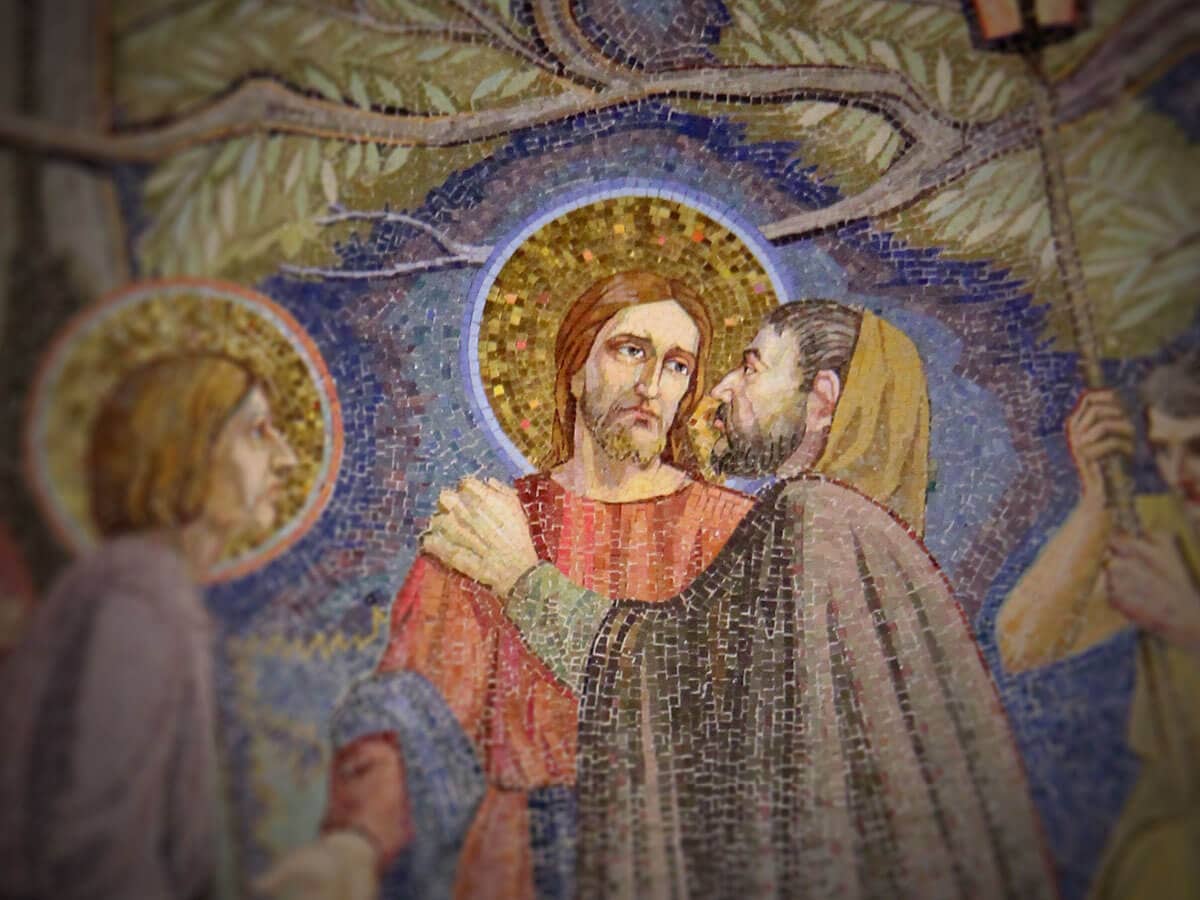
    Check out these photographs that I took of a display in the interfaith chapel, inside the St. Joseph building of Asheville's Mission Hospital.  They make a beautiful point of the transcendence of the "golden rule" across wisdom/faith traditions.

    0 (0 Ratings)

    The Best of Intentions

    Friday, July 29, 2011, 10:33 PM [General]

    Today I ran into something unexpected.

    Who knew that everything I say was being used against my brother?  Well, yes, it is as personal as that sentence would suggest.  And, yes, I'm disappointed and shocked, because, as I mentioned earlier, I have a 'swath of naivete'.  

    On the other hand, I came to a refreshed sense of family protectiveness.  

    I have two younger brothers.  One is currently experiencing the equivalent of a divorce, although he was not married.  In addition, she was his best friend.  Having gone through two divorces, I can completely understand what he must be going through.  

    But now my attempts to make this transition smoother have backfired.  As part of my spiritual journey, I am attempting to walk the talk, and one of the ways I've tried to do this is by nonviolence in my behavior and words.  I interpreted that, in this case, to mean that I should attempt to maintain friendship with my brother's ex, or, at least, to not create any further animosity.  My hope was to keep an already painful situation from becoming unbearable for my brother.

    This has caused me to re-evaluate my approach to living nonviolently, to have a better appreciation of how much I do feel protective of my family, and to realize that my best intentions can be used against me.  And what good are intentions when they cause others pain?  Or rather, what purpose do intentions serve when the results of connected actions cause others pain?  

    I can't fix the world.  I can't even fix my brother's problems.  But some how I can make them worse without even needing to lift a finger.  It makes me want to look over my shoulder.  

    0 (0 Ratings)

    Hope as a Fishhook?

    Thursday, July 28, 2011, 8:44 PM [General]

    Synchronicity brought me a new description of "hope" this morning.  Increasingly, I find myself doubting my elementary school ideas about the concepts of hope, inspiration, and faith.  But, then, I did quit work to ask questions of the universe full-time.  Did I really expect my perspective and understanding to stay the same?

    Back to today's definition of "hope."  

    I began reading Ann Patchett's latest novel, State of Wonder, after a long wait for it on the library's request list.  The wait was long enough for the novel to be a pleasant surprise, instead of one of those tense events that lends itself too easily to disappointment.  You know...when you've gotten so excited about the book that there is absolutely no way it could meet your expectations.  This also happens with buying shoes, holiday plans with significant others, and trips to Disney World.  

    What I certainly wasn't expecting was the incredible beauty of Patchett's writing.  Or the incredible pain that she uses that writing to slap you with before you've gotten past page one.  You don't know who Anders Eckman is or how he died, but his death is already meaningful and sad before we get past paragraph one.  It is Anders's wife, Karen, in the second chapter, who delivers this poignant description of "hope":

    "Hope is a horrible thing, you know.  I don't know who decided to package hope as a virtue because it's not.  It's a plague.  Hope is like walking around with a fishhook in your mouth and somebody just keeps pulling it and pulling it." (p. 43)

    I stopped dead in my reading tracks and said a quiet "Amen."  

    But I knew who had began that whole business about hope as a virtue.  Well, some of the folks who did it.  The Greeks gave us the story of Pandora and that blasted box.  Here's you a closed box, but don't even think about opening it.  Contemporary parents use this little game of reverse psychology to entice children to read books and cultivate a healthy attitude about alcohol and other taboos...the idea being to make the taboo easily accessible so it does not end up on an alluring pedestal.  Porn on the coffee table, Shakespeare in the locked, glass-front bookcase.  Well, that's the general idea.

    Regardless of whether Pandora was heaped with an undo amount of blame, when her curiosity did get the better of her, she popped open that box.  And after all the evil spilled out, hope was left.  This irrevocably binds hope with evil.  If there is no evil, is there a purpose for hope at all?

    But yin and yang, darkness and light are concepts that are best defined in relationship to one another.  Nature does not give us one without the other.

    Perhaps I should not be startled by this revelation.  By now, I'm pretty sure, my reader realizes that I have a wide swath of naivete.  I prefer to think of it as that sunshiny optimism that just doesn't quit.  I was born in the American South (and raised in old-style Appalachia, on top of that), after all.

    (My Yankee atheist best friend is choking on her locally-brewed weisen in the Rhineland-Palatinate right now.)  

    0 (0 Ratings)

    Civil Disobedience and Hope

    Wednesday, July 27, 2011, 8:22 AM [General]

    I found this treasure of an article in The New York Times online edition, "Israeli and Palestinian Women Take a Rare Swim."  It tells the story of a group of Israeli women, calling themselves We Will Not Obey, who have organized at least seven successful day trips to the beach and into Tel Aviv for landlocked Palestinian women, who aren't legally allowed to travel through Israel.  

    The most wonderful part of the story is that these are women creating friendships outside of a larger militant religious reality.  And they are taking grave risks to do this.  And they are not ignorant.  Here are some quotes from the Israeli women used in Ethan Bronner's article:

    "What we are doing here will not change the situation," said Hanna Rubinstein, ... "But it is one more activity to oppose the occupation.  One day in the future, people will ask, like they did of the Germans: 'Did you know?' And I will be able to say, 'I knew.  And I acted.'"

    And this from Hagit Aharoni, one of the organizers and a resident of Tel Aviv, "...I don't want to be an occupier.  I am engaged in an illegal act of disobedience.  I am not Rosa Parks, but I admire her, because she had the courage to break a law that was not right."

    I realize the danger of encouraging disobedience against laws that are subjectively considered "not right," but I do believe in civil disobedience and peaceful demonstration of one's objections to laws.  This is a valid way of expressing opinions and perspectives when the governing parties do not allow or heed popular voices in the press.

    I am under no illusions that I know what I'm talking about when it comes to Israeli-Palestinian politics or history, but these women live it.  What they are doing is inspirational and wonderful, if only as an example of the love that is possible when we take our anger at the current state of the world and transform it into helpful acts of outreach.  

    Love on!

    0 (0 Ratings)

    Inspiration = Christian??

    Tuesday, July 26, 2011, 7:14 PM [General]

    A close friend and bibliophile, like myself, recently selected a free Kindle edition of a book that promised to be a medical thriller.  Instead, she discovered, to her disappointment, that the author was more concerned with Christian evangelism than crafting a well-written story.  The author's goal backfired spectacularly with my friend.  

    I decided to check out the description of the book, just to see if she had overlooked the book's genre as "Christian fiction" or if it was billed as something else.  She does not appreciate any surprise backdoor Christian preaching.  On the other hand, I'm more concerned with the frequent response I hear from readers that Christian fiction is assumed to not be written well.  I'm a fan of genre-fiction, including Christian.  (Actually, I'm a fan of the written word in general.)

    I discovered that the book was identified as "inspirational" in the Booklist review and that the author was also identified as having written "inspirational pieces."  My friend, if she did read these blurbs, did not automatically connect "inspirational" with Christian.  As a librarian, I would have made the connection because of having experience with the publishing industry.  Suddenly, I was able to see from my friend's perspective and realized that giving Christianity a corner on the "inspirational" market isn't fair, nor accurate.  

    I realize now that many libraries, bookstores, and publishers have decided to straddle the fence of nonprejudicial practices by creating the fuzzy area of "inspirational" fiction.  Nonfiction does not need such fuzziness to create easily identifiable niches.  But the fiction fuzziness is overwhelmingly full of Christian-based fiction.  

    I do not know if this means that few non-Christian writers are submitting manuscripts or if the American publishing industry simply isn't receptive to non-Christian "inspirational" writing.  I do know that, as with any genre, quality of writing is one of my primary concerns as a reader.  I also know that the idea of "inspiration" being identified primarily with a single belief system is bothersome, despite my own grounding in that same belief system.  

    Regardless, it is something to think about.  


    Update 07/27/11:

    A little research turned up these non-Christian, belief-based fiction resources online (none of which I can endorse, just as I cannot endorse any Christian-based fiction resources because I do not have first-hand knowledge of their publishing or selection practices):

    Coverage of the inaugural Hindu Best Fiction Award ceremony: "Celebrating the Legacy of Literature" November 7, 2010

    And the top 11 titles for the award:  "The Hindu Best Fiction Award 2010 Shortlist" October 1, 2010

    The Islamic Fiction Books site, established by the Islamic Writers Alliance.  

    The fiction section of the Islamic Bookstore.com.

    Kimberly French's "Guide to Buddhist Fiction" on the Unitarian Universalist World site. 

    An author interview from DharmaLife, "State of the Art Encounter." 

    Buddhist Fiction Blog

    From Morton Grove Public Library, a list of "Jewish Fiction, not Holocaust Related, for Book Clubs."

    Barnes & Noble has a listing of "Jewish Fiction & Literature" with lots of sub-categories in the left-side column.

    And Judaism.com, a major online store, has a listing of available fiction books.

    Finally, if you're just now learning of Christian fiction and want to learn more, you can find beaucoup titles here:  Christianbook.com/Fiction

    0 (0 Ratings)

    Bright Sunshine: Mind vs. Brain

    Monday, July 25, 2011, 4:12 PM [General]

    I took today's featured Beliefnet quiz, Are You Optimistic?, and I scored at the top: Bright Sunshine.  Apparently I'm a silver lining believer. 

    You'd never know that I deal with chronic clinical depression and have a history of very scary panic attacks.  How can I be an optimist and be so depressed?  My mind's perspective is at biological odds with my brain.  The neurons aren't matching up with the spirit.  

    It is a curious thing that such disparate states of being exist simultaneously within one body.  It makes me think of the stories of hope that emerged from World War II Holocaust survivors' memories, the capacity to forgive that victims of crimes can embody, and the will to live that keeps people going after traumatic losses.  At the end of the day, we are amazing creatures.  Kind of like stubborn Rubbermaid.  Maybe those silver linings are actually rubber.


    0 (0 Ratings)

    Page 1 of 2  •  1 2 Next
    Advertisement

Journal Categories