








“It is customary to blame secular science and anti-religious philosophy for the eclipse of religion in modern society. It would be more honest to blame religion for its own defeats. Religion declined not because it was refuted, but because it became irrelevant, dull, oppressive, insipid. When faith is completely replaced by creed, worship by discipline, love by habit; when the crisis of today is ignored because of the splendor of the past; when faith becomes an heirloom rather than a living fountain; when religion speaks only in the name of authority rather than with the voice of compassion--its message becomes meaningless.” ~ Abraham Joshua Heschel (God in Search of Man)
My father recently joined a Facebook group called: “Dear God: If you really exist please tell Pat Robertson to SHUT THE F**K UP!” Now, my father, like me, is a very mild mannered person who rarely swears. It usually takes something fairly extreme before either of us are moved to utter a curse word. So it was quite startling to see him associated with these particular words. Before this, the most unexpected thing I’d seen him do was actually joining Facebook.
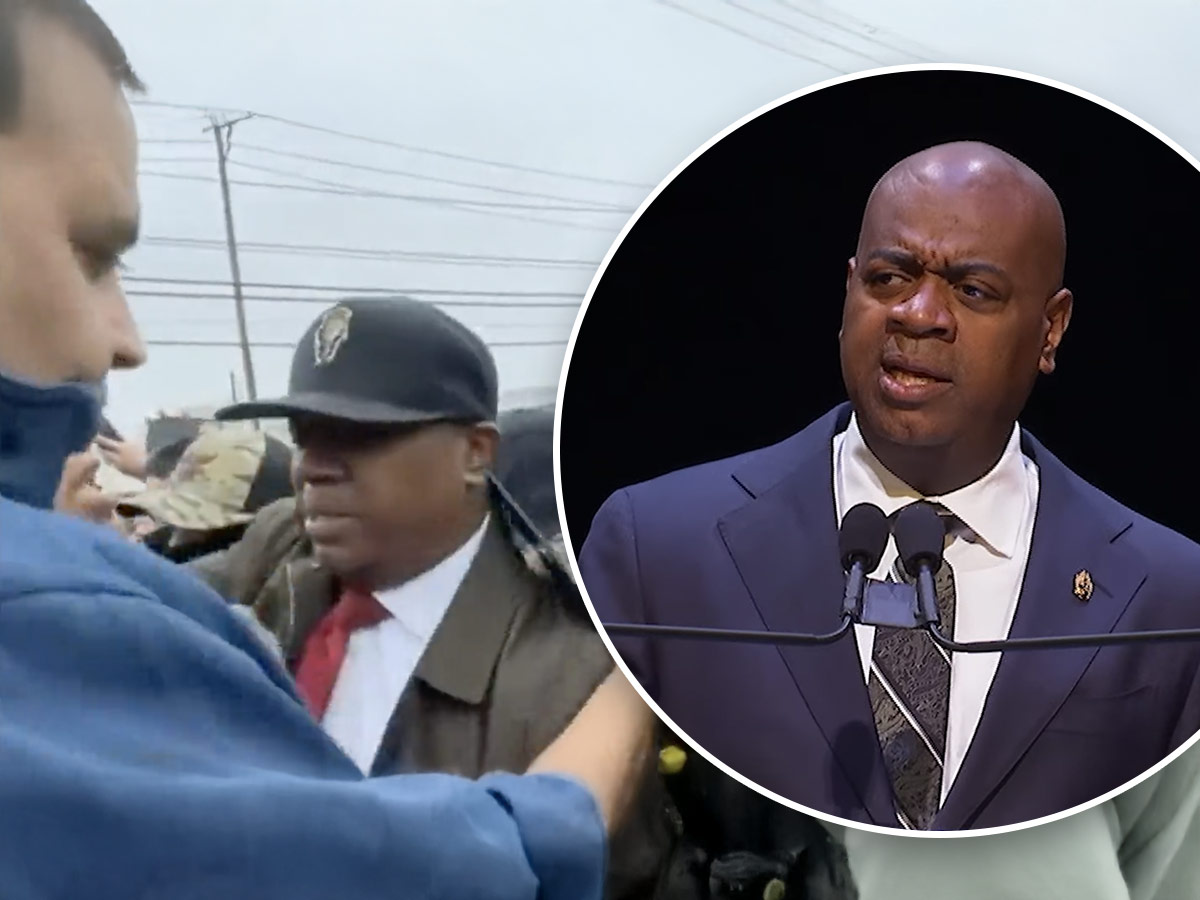
So, what was it that Pat Robertson said that had my Dad resorting to asterisks and expletives? Just this pearl of wisdom and compassion:
"Something happened a long time ago in Haiti, and people might not want to talk about it. They were under the heel of the French ... and they got together and swore a pact to the devil. They said, 'We will serve you if you'll get us free from the French.’ True story. And the devil said, 'OK, it's a deal.' Ever since, they have been cursed by one thing after another."
When Abraham Joshua Heschel wrote the passage quoted above, I doubt he had Pat Robertson in mind. But to his list of religion’s failings—“irrelevant, dull, oppressive, insipid”—we might now add ‘heartless and cruel.’ Heschel’s critique of religion is not a condemnation, but a call to action. It is a powerful critique because it is made by a deeply religious man—a rabbi raised in a family of Hasidic Jews, a mystic, and a theologian. Heschel’s point is not that religion is wrong, but the uses to which it is put by human beings are too often wrong. God caused water to flow from a rock, but the vessels of religion that we have constructed to capture that stream harden into authoritarian doctrine and the living fountain of faith is stopped up.
I have seen the video where Robertson makes these reprehensible remarks, and I have to say, I think that he truly believes that he is being compassionate. He is not filled with righteousness or hatred. He is not preaching fire and brimstone. In fact, he expresses concern and hope for the people of Haiti. This does not make his words any less troubling, however. He still said what he said. He believes Haiti is being punished by God for making a pact with the devil. But, if he is not intending to be cruel, that still leaves this question unanswered: “What’s wrong with Pat Robertson?”
I’m sure several people reading this can answer that question easily, but I want to suggest something else, as well. I think that the problem with Pat Robertson, and those like him, is that they have constructed their religion in such a way that it becomes a defense against truly experiencing the full impact, the full horror and catastrophe of events like the earthquake in Haiti. To declare such a disaster as God’s punishment is to make an escape from the reality of human suffering. It means you don’t really have to feel the pain, the grief, the fear and the horror, which are inescapable realities for the Haitian people.
For Heschel, religion and love of God meant compassion and action. It meant being affected by the suffering of those around us and doing something about it. He was active in the Civil Rights movement and marched with Martin Luther King. Heschel believed that we should not defend ourselves from the human predicament:
“I would say about individuals, an individual dies when he ceases to be surprised. I am surprised every morning that I see the sunshine again. When I see an act of evil, I'm not accommodated. I don't accommodate myself to the violence that goes on everywhere; I'm still surprised. That's why I'm against it, why I can hope against it. We must learn how to be surprised. Not to adjust ourselves. I am the most maladjusted person in society.”
In the Christian tradition, the portrait of Jesus is one of a man who did not remain distant or aloof from human misery. We see a man who weeps in the face of death, who reaches out his healing touch to the sick and needy, who responds to those who seek him out honestly with love and compassion. He saves his condemnation for the scribes and Pharisees, those religious leaders who rigidly hold to the form of religion, but have lost its spirit. To others, the so-called sinners, as in the story of the adulterous woman, he speaks with tolerance, forgiveness, and acceptance.
How different is this portrait than the one painted by Pat Robertson! I suppose that if you conceive of an event like the earthquake in Haiti as God’s punishment, then you can’t feel too sorry the victims because that would be to question God, to doubt both his mercy and his justice. But to experience doubt about God in the face of such a tragedy is an honest response. And maybe it’s against that kind of doubt that Robertson’s version of religion is ultimately defended against. It is uncomfortable to consider where a loving God is in all of this and how he could let such devastation occur to a poor and defenseless people. It is hard not to feel that the Haitians have been abandoned by God. And if them, then all of us.
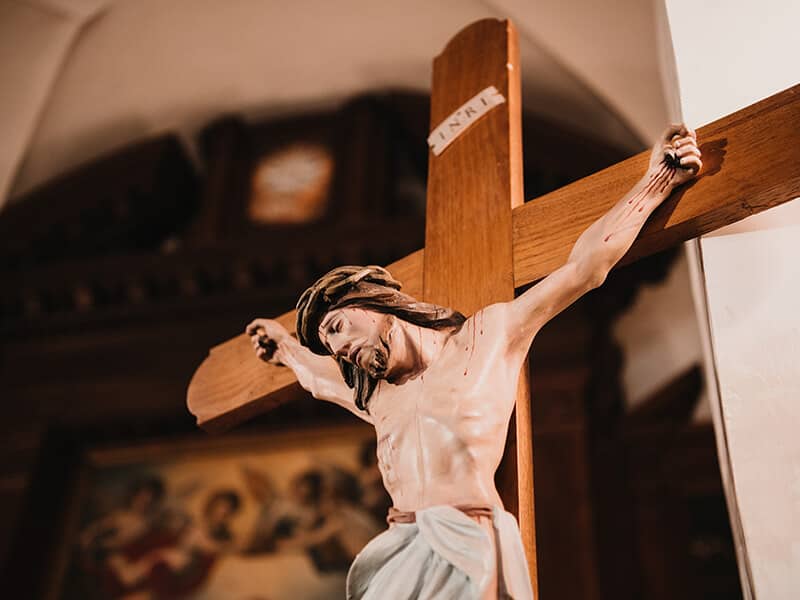
I believe a truly religious attitude must be willing to undergo the painful feelings of doubt and abandonment. To allow such a feeling is to share in an experience that has been sanctified, in the Christian tradition, by Jesus’ own encounter with suffering. In the unspeakable torment of his crucifixion, he confronts the terrifying possibility that he has been abandoned by God, and cries out the opening words of the 22nd Psalm: “My God, my God, why have you forsaken me?”
It is by allowing thoughts like these, as Jesus did, that we prevent ourselves from offering facile and merciless explanations for occasions of suffering, such as that offered by Pat Robertson forHaiti. The word compassion means ‘to suffer with.’ We cannot defend ourselves against the suffering of others if we are to be able to respond with caring and compassion. And when we consider the outpouring of concern, the expressions of compassion, the relief efforts, the generous contributions of time, money and assistance; when we consider the spontaneous generosity of ordinary human beings, isn’t this where we find the presence of the divine that we had thought to be so absent from the scene? I believe that if we can learn to sit with suffering, if we can allow ourselves to experience doubt and grief, then we truly stay open to the living fountain of divine reality, which reveals itself in the astonishing resilience of the human spirit.
The New Testament offers this assessment of religion: “If any think they are religious, and do not bridle their tongues but deceive their hearts, their religion is worthless. Religion that is pure and undefiled before God, the Father, is this: to care for orphans and widows in their distress, and to keep oneself unstained by the world.” (James 1:26-27).
Today Haiti has more widows and orphans than it did a week ago. They need the care and generosity that is the true spirit of humanity; they need the compassion that is the hallmark of true religion.
If Pat Robertson cannot open himself to this vision of the human spirit, so beautifully exemplified in the life of Jesus and in the words of Abraham Joshua Heschel, then he should just shut the fuck up.
O my friends, What can you tell me of Love, Whose pathways are filled with strangeness? When you offer the Great One your love, At the first step your body is crushed. Next be ready to offer your head as his seat. Be ready to orbit his lamp like a moth giving in to the light, To live in the deer as she runs toward the hunter’s call, In the partridge that swallows hot coals for love of the moon, In the fish that, kept from the sea, happily dies. Like a bee trapped for life in the closing of the sweet flower, Mira has offered herself to her Lord. She says, the single Lotus will swallow you whole. ~ Mirabai (trans. by Jane Hirshfield)
This is my New Year’s resolution: To lose my mind, to dive into the heart, to turn every moment of my life into a song of praise. Like the Hindu poet-saint, Mirabai, I want to be crushed by God, enclosed in His sweet flower, and swallowed whole by the Divine.
Do I sound a little crazy? Does what I want sound impossible, unlikely, extravagant? Then I’m on the right track. You see, I am tired of asking too little of my life and being disappointed if that is all I get. This year I don’t care about losing weight, eating better, or exercising more. I want nothing less than the total transformation of my being. I don’t want to be healthy, I want to be fully alive. I don’t want to have more fun, I want to know the fullness of joy. I don’t want to have better relationships with family and friends, I want to become Love itself.
There is a legendary story about the great Sufi poet and mystic, Hafiz. It is said that when he was still a young man, Hafiz fell in love with a beautiful woman. Desperate to win her love, he went to the tomb of a great Sufi master where it was believed that anyone who could stay awake for forty consecutive nights would be granted his heart’s desire.In his burning love for his beloved, Hafiz completed his forty day vigil, at which point he was visited by the angel Gabriel. He was so overcome by the beauty of the angel that he forgot all about the young woman. When he was asked to name his heart’s desire, he cried out: “I want God!” From this beginning, Hafiz became the God-drunk lover of the Divine who is still so wonderfully present in his ecstatic poetry.
There are two things that I take away from this story. The first is that any path, if followed with devotion and discipline, can become a path to God. In this case, it is the very human realm of romantic and sexual love that draws Hafiz to the revelation of God. But I would suggest that this would also apply to all the great religions as well. I will confess that I am not very picky when it comes to the ways God chooses to reveal himself. I mean, who am I to demand of God that he choose a particular face or dress simply to please my sensibilities?
Not that I think that it is a simple matter of my choosing one path over another. It is not the ego that leads in this, picking the bits and pieces it prefers from some spiritual buffet. No, my experience has been that certain things—moments, ideas, images—are filled with a power that can only be called Divine. I believe that it is in this way that my path chooses me. The individual definitely has a role to play—Hafiz had to stay awake for forty days before God was revealed—but the initial choosing belongs to God. And though it is the Christian path that has chosen me, that in no way precludes me from experiencing the Divine in other traditions as well.
The second idea I take from the story of Hafiz is that the heart of any path to the Divine is Love. And its two faces, as mentioned above, are devotion and discipline. In other words, Love is both a feeling and an activity.As the Hafiz story shows, there is a parallel between the relationships we have with other human beings, and the one we have with God.We are caught by some power that draws us into a relationship with the other and, in response, we take action to strengthen and understand that relationship.
But, just in case we make the mistake of thinking that the Path of Love is something merely sentimental or sweet, Mirabai, in her poem, lets us know that the road is not an easy one. She warns us that “when we offer the Great One our love,” we will be crushed, killed, trapped, and swallowed. Love, she is teaching, is a radical dismantling and de-centering of the ego. Perhaps what she is saying is that through love we return to, and become one with, the source of Love —“The single Lotus will swallow you whole.” In the Christian tradition these ideas are expressed in the words of John: “Beloved, let us love one another, for love is from God,” as well as those of Paul when he says: “It is no longer I who live, but Christ who lives in me.”
And so it is that I set myself the impossible goal for the New Year of being so completely overpowered by the Divine that all that is unworthy, all that is petty, all that is greedy and grasping and selfish in me is dissolved and I become, in the words of the old song, a fool for Love. I am under no illusion that this is a goal I can reach in this year or even in this life, but that is no reason not to make the attempt. Who knows? Maybe if I am disciplined and devoted enough, I might be able to say with Hafiz (as imagined by Daniel Ladinsky):
“It is all just a love contest. And I never lose.”
Tuesday, November 10, 2009, 05:50 PM EST
[General]
“Jesuslooked up and saw the richputting their gifts intothe offering box,and he saw a poor widow put in twosmall copper coins. And he said,‘Truly, I tell you,this poor widow has put in more than all of them. For they all contributed out of their abundance, but she out of herpoverty put in allshe had to live on.’” (Luke 21:1-4)
Recently, my sister, Carla, wrote a post on her blog which was titled A Call to Action. It’s a wonderful meditation on the activity of love. She writes:
“If your partner is ill, love is a call to action. Love wakes parents up in the middle of the night. It caused a man I know to risk tenure because his mom was sick half way across the country in Cleveland. It invited my friends to discover the bottomless depths of their generosity and compassion. Yes. Yes. Love is not so much a feeling as an alarm bell, a runner's gun, a reminder that we are only as good as the good we do for one another.
Love is not so much a feeling as a call to action.”
Regular readers of this blog will know that my sister has ALS. Carla faces everyday with the knowledge that her time for action in this world is limited. She cannot use her legs or her hands. She has round-the-clock caretakers who wash her and feed her and get her dressed. And yet, through all this, she remains a woman of action.
Carla is endlessly creative. She has turned her confrontation with death into a work of art. She writes a beautiful blog. She doesn’t just use a wheelchair, she transforms it. She has decorated it, and the van in which she now travels, with colorful, funny, completely irreverent, and appropriately inappropriate images of her experiences.
In recent weeks she has been putting together her latest brainchild—a pinup calendar featuring regular people with ALS in provocative poses to raise money and awareness for ALS. It’s going to be called the Always Looking Sexy Calendar, and even though she is confined to a wheelchair and tires easily, Carla has coordinated the activity of models and photographers, printers and publicists from different parts of the country to get this project completed for the holiday season. It is a daunting project for someone with full capacity and energy. Like many creative people, she’s a little crazy, but this allows her to throw herself into such a project and make it happen.
Whenever I read the story of the widow’s gift from the Gospel of Luke quoted above, I think of my sister. Whatever she does, she gives it all she has and all she is. She lives what she writes – that love is a call to action. One of the things that she loves the most is life itself, and her creative activity is one of the ways that she cares for life.
Last winter, after my wife had come home from the hospital following emergency surgery, Carla offered to come out to help take care of our family. She was already in a wheelchair and had very limited mobility. “I can’t do much,” she said, “but I’ll do whatever I can.” She didn’t have much she could do, or much she could give, “but she out of herpoverty put in allshe had.” She’s crazy like that.
And isn’t that the point of the gospel story? The widow’s poverty—like my sister’s—is, in reality, abundance because it is full of love. The abundance of the rich, really poverty if it is devoid of love.
I remember when I was a little boy getting into situations which seemed to me at the time scary or panic-worthy, like having soap in my eye that stung me, or getting my pants leg caught in my bike chain that I couldn’t get out so I was unable to get back home to safety. I remember in those situations crying and calling for help. Inevitably, it was Carla who would appear out of nowhere to see if I was okay. Rarely, did she get angry at me, but with simple caring and compassion she would rescue me and bring me back home.
In stating that love is a call to action, Carla has touched on the thing that Karen Armstrong finds is the root of all the major religions, that is, compassion:
“The religions are forms of ethical alchemy, if you like. That you behave in a compassionate way and this changes you. Why? Because all the great masters of religion tell us that what keeps us from a knowledge of the divine, from — which has been called variously God, Nirvana, Brahman, the sacred — what keeps us from this ultimate reality is our own egotism, our greed, that often needs to destroy others in order to preserve its sense of self, or even just to denigrate others. What compassion does, it makes us dethrone ourselves from the center of our world and put another there. And it's this that they all teach leads us into the presence of the divine.”
Carla’s version is immediate and imperative:
“If you knew you were going to die, who would you want to be with and how would you spend your time together? What are you waiting for? From my vantage point I can see that there is no time to delay -no time to deny the people we love of our time, our attention or our action.”
Carla’s love is an active love. I have known it from the time I was a small boy. For this I am grateful. For this I am blessed.
I listened to a really compelling interview on CBC’s Tapestry, a radio program which explores religion and meaning, much like Speaking of Faith in the U.S. The interview was with Gabor Mate, a doctor in Vancouver, B.C. (my old hometown) who works with drug addicted patients in Vancouver’s downtown eastside, a very rough and troubled part of the city.
What was so refreshing about the interview was to hear a medical doctor discussing the spiritual void that is present in a lot of substance abuse. On the one hand, there is nothing new about this—AA and its offshoots have finding a “higher power” as a central part of their healing process. But to hear it coming from a medical doctor is unusual, especially in these days when an increasing number of psychiatrists and MDs are leaning more and more heavily on neurochemical explanations of psychological disorders and abandoning more psycho/social/spiritual approaches.
Dr. Mate’s idea is simple enough – at the root of addiction is a “God shaped void,” a spiritual vacuum that one attempts to fill with drugs, alcohol, or sex. The effect of the drug-taking is to simulate a dissolving of the ego into a larger spiritual essence. Of course, it is not God, or Spirit, or the Transcendent, and it is only a fleeting moment and so it leaves a person in a state of constant yearning, and ultimately, disappointment and disillusionment. Mate’s metaphor is the Buddhist image of the realm of hungry ghosts. The beings in this realm of suffering “are constantly extremely hungry and thirsty, but they cannot satisfy these needs. These beings are drawn with narrow necks and large bellies. This represents the fact that their desires torment them, but they are completely unable to satisfy themselves.” (quoted from Wikipedia)
I couldn’t find a transcript of the program or I’d include some quotes. One of the more fascinating moments in the interview is when Dr. Mate offers his definition of addiction, and then reveals his own addictive behavior around Classical Music CDs. Buying CDs is benign activity unless you spend thousands of dollars on it every month, hide your behavior from your wife and kids, and feel high levels of shame around your behavior.
Gabor Mate struck me as thoughtful, insightful, and honest. The interview runs about an hour, and is worth a listen. It’s called Filling The God-Shaped Void.
“It’s whether you say yes or no to the serpent, to the adventure of being of alive.” ~ Joseph Campbell
Last week I attended a beautiful Vespers service at my church. Dimmed lights, silent reflection, and quiet music set the mood for a meditation on the 23rd psalm. The minister took the image of the cup that runneth over as the focus of his talk.He read a quote from Martin Luther that I haven’t been able to track down, but it spoke of the grace that comes when we stop resisting the troubles and difficulties that are a part of life, when we stop saying ‘No’ to hardship. There is a Grace that is deeper than that No, says Luther, if only we are able to affirm all that happens to us, good or bad.
In the quote, Luther describes his own experience of being “crushed in the spirit.”By enduring his anguish, by surviving it, but, more than this even, by saying Yes to it and affirming his suffering, he discovered that Grace awaits on the other side of such pain, and he knew the experience of the overflowing cup talked about in the psalm.Listening to this meditation, I was moved by the idea of a Grace deeper than No, which I take to mean that to resist a part of life is to resist the whole of life, and that pain and sorrow are not barriers to living, but are also bearers of life’s secret.
When I was in theater school, we would take classes in improvisation. One of the cardinal rules of improvisation is that you can’t say No. That doesn’t mean that you can’t actually use the word no, but that you must avoid blocking the suggestions made to you by the other actors. So, if someone says, “Gee, your sex-change operation went really well,” you can’t say, “I didn’t get a sex-change operation!” You would have to go with the suggestion. In other words, you have to adapt. But it is about more than that. To say No is to cut off the creative possibilities of the moment. As Keith Johnstone, an improvisation teacher and the creator of Theatresports, once put it, “There are people who say Yes and there are people who say No. Those who say Yes are rewarded by the adventures they have, and those who say No are rewarded by the safety they attain.”
Saying No, or blocking, is not just a problem in improv, it is a problem in life.In many ways, we have become people who are unwilling to suffer any kind of discomfort, let alone pain and suffering.Our collective mantra has become “I can’t deal with this,” or sometimes, “I don’t need this right now.” And yet we don’t always get the option to decide whether we will deal or not.
There have been many times in the past two years when I have been confronted with the question of whether I could deal, whether I was willing to face pain and loss. After my wife, Allison’s, cancer treatment was done, and she began to look and feel healthy and whole again, I realized I was having trouble opening up to her and allowing myself the emotional intimacy that was always so easy and natural for us. I had come too close to losing her and I recognized that in opening up to her, I was recommitting myself to the possibility of experiencing that agony again.
I have experienced something similar with my sister, Carla, since she was diagnosed with ALS. Beside the instinct to be near her and get every moment I can with her, there is a counter instinct in me to stay away. Pain in this situation is not just a possibility. It is a certainty. And something in me wants to run far away from it. With both Allison and Carla, there is a strong No in me that does not want to have to feel my grief. But, the thing is, the alternative is unacceptable, because it would mean not having the experience of loving and being loved by these two incredible people in my life. It would mean saying No to happiness and joy. I believe that there is a Grace deeper than No.
In my work as a psychotherapist, and in my personal experience, it has become ever clearer to me that one of the most important qualities a human being can develop is the willingness to tolerate pain and suffering. I have found that a person who has a capacity for grief usually has an even greater capacity for joy.
To deny pain and suffering is to deny life. It is to choose a less than human life. Because there is no life that will be free of difficulties, that will be spared the encounter with sorrow. To accept this is not to give in to despair. Quite the opposite. It is to develop an important strength, a strength born of an honest vulnerability. And this becomes a doorway to joy, because when we are faced with loss we remember that each moment is a gift. Life is a gift. Love is a gift.
This is not just a nice idea. It is literally true. We do not and cannot will life and love into existence. They are given as part of the condition of existence and it is our task to learn to receive them. And this is the heart of the matter. To receive these gifts means that we agree one day to let them go, to give them back, to lose them. This is what it means to say Yes to the adventure of being alive. Yes is a small word, but its implications are immense. To accept love means to accept loss. To fully accept life means we must fully accept the fact of death. But the opposite is also true. If we accept loss, we will know love. If we allow death, we will truly be alive. It is only in saying Yes that we finally come into the fullness of our true being.
Saying Yes takes courage. It takes courage, says Paul Tillich, simply to be. It can be a trial and a sacrifice, but the reward is great. Deeper than No is Grace. Passing through pain we discover joy.
At Vespers, as the minister spoke, I knew that this was a service I needed to hear. I knew as I heard about the Grace beyond No, that I was blessed to know love that caused me pain, and to know pain that taught me also about joy. At the end of the service, the sanctuary was lit only by candlelight. Everyone lingered a while in that glow, in the still silence, before, one-by-one, we each got up to leave. I wandered out into the cold, dark New England night thinking about Allison, and Carla, God, my life. At that moment, I was the cup that runneth over. Everything seemed to be exactly in its place.
If you had asked of me anything that night, I would have had only one answer: Yes, yes, yes.