Level 4 Member
Points: 5070
|
Wednesday, August 11, 2010, 2:23 AM
[ General]
Florence Nightingale, who died 100 years ago this week, is popularly remembered as “the Lady with the Lamp” (from her habit of making rounds at night), who did heroic work nursing wounded soldiers during the Crimean War. But more significantly in terms of medical history, the greatest achievement of this remarkable woman is the solid foundation she laid on which the modern profession of nursing could be built.
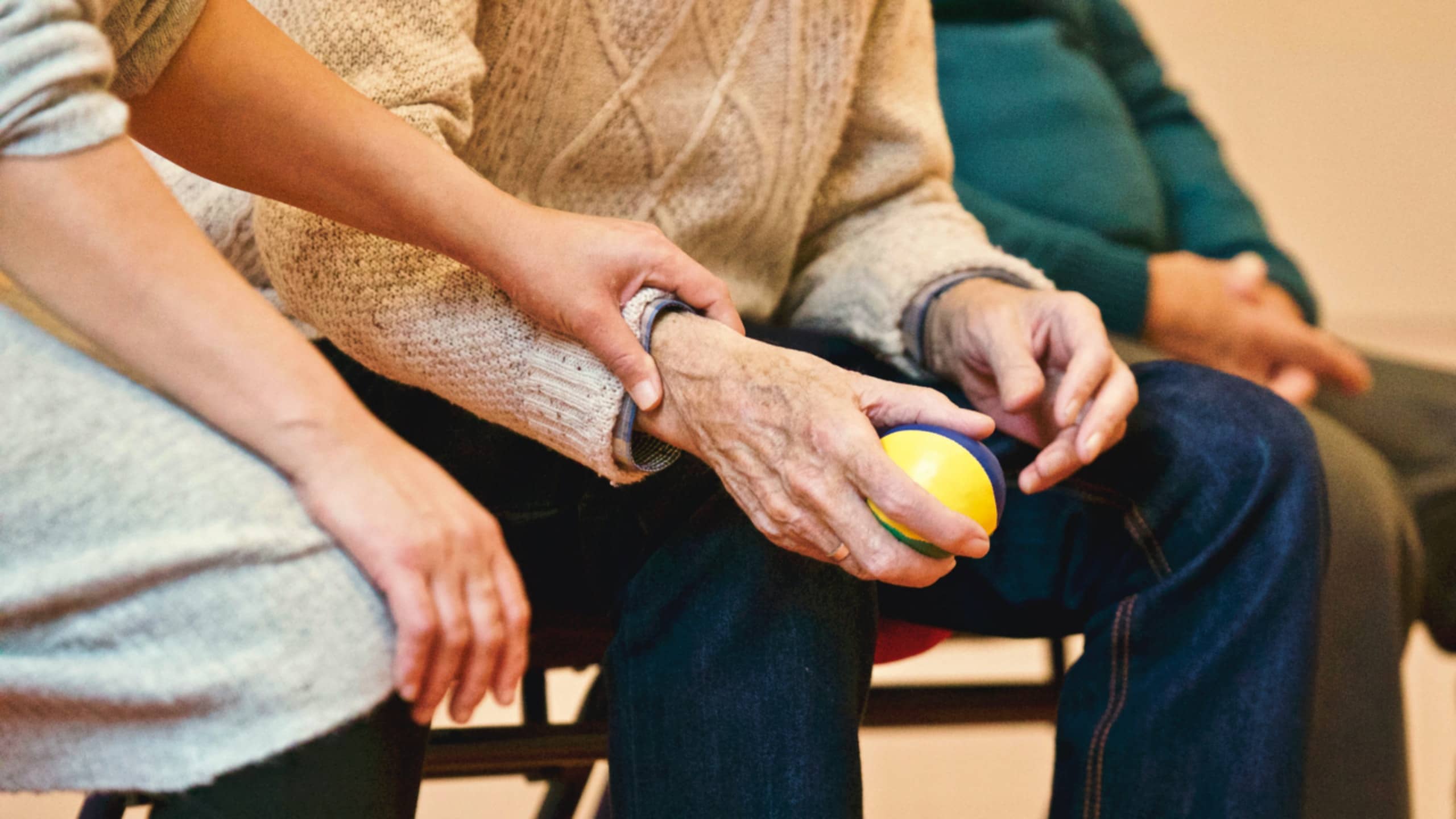
And where would we be without our wonderful nurses? While our oncologists and breast surgeons get the credit for saving our lives, the oncology nurses are sometimes forgotten. And yet, they can play such a vital role in bridging the communication gap that can sometimes exist between doctors and patients. I know this was true for me with my own dedicated breast care nurse, Marina. All I can remember in the midst of the confusion of that day I was told I had breast cancer, was the comforting presence of Marina in the background. It was she who took my hand as I stumbled from the consulting room, in shock and confusion, and gently explained what was happening. She was there for me to interpret the medical jargon, when it confused me and to offer support when I was frightened and overwhelmed. I will always be grateful for her comforting and reassuring presence. And now that I am part of a nurse-led follow up clinic at the breast unit of the hospital I attend, I am also grateful for the time and attention I get from the team there.
Each year I give a talk to trainee oncology nurses at the UCD School of Nursing, and when I tell them of my personal experience of my being diagnosed with cancer, I always finish my talk by telling them how vital the role they can play in easing the shock and confusion of this experience for patients. Just like their founder, Florence Nightingale, these dedicated nurses carry on the noble tradition of lighting the way – a light through the darkness and fear of a cancer diagnosis.
Wednesday, August 4, 2010, 9:34 AM
[ General]
Webster’s dictionary defines the word ‘perfect’ as follows: - Lacking nothing essential to the whole: complete of its nature or kind. - Being in a state of undiminished or highest excellence: FLAWLESS
Pretty high expectations to put on ourselves don’t you think?! Perfectionism is merely an illusion because if it were a reality then it actually wouldn’t be perfect; this is what makes it such an insane desire to achieve something that is not real. It is basically a never-ending quest that is often media-driven and extremely unhealthy.
Sometimes we fall into the trap of believing that we can only feel whole after we’ve done everything to ours or society’s unrealistic level of perfection. So we strive to have the perfect body, the perfect home, the perfect job. Cancer can give us a break from having to be perfect in this way (although sometimes we feel a need to transfer these expectations to being the perfect cancer patient) but then what happens when all treatment is over? Do we go back to being the perfect wife, mother and employee again? Sometimes we put such realistic expectations on ourselves (and others) to be a certain way and end up damaging ourselves (and loved ones) in the process. The pursuit of perfectionism can become an obsession that sometimes leads to depression and psychological distress.
Try this instead: Accept whatever is unfolding, whatever you’re feeling, right now. If you are tired, your energy levels are low, you feel down, you struggle with your body image, then honour those feelings and don’t put unrealistic demands on yourself. You are perfect just the way you are right now. Believe it!
Tuesday, July 20, 2010, 10:36 AM
[ General]
In the first few weeks of your diagnosis you may have been weighing up your treatment options while listening to stories of those who bypassed the surgeon’s knife/chemotherapy/radiotherapy, and went straight to “cure” by means of alternative therapies.
I believe we all need to have an open mind about alternative treatments, but I also believe we need to focus on what is working and saving lives when it comes to cancer. While some of those who promote alternative cancer treatments are selling dubious at best, dangerous at worst, products and services to vulnerable people in search of a miracle cure; many others mean well in advocating for alternative health treatments.
But the truth is there is no magic cure.
Crude as it can seem at times, surgery, chemotherapy, radiation, and hormonal treatments are saving lives. These treatments aren’t pleasant, and many of us would much rather opt for an alternative option if we knew it could save us. Unfortunately, there is not as much evidence to support the use of any alternative cancer therapy.
I took full advantage of complementary therapies, like reiki, reflexology and acupuncture during my chemotherapy (while making sure that it didn’t interfere with the conventional medicine my oncologist was using) and I continue to do so as part of my wellness plan. There is nothing wrong with seeking alternative and complementary methods, but doing so without seeking the advice of a trained medical practitioner is not advisable. You deserve the thousands of hours of research and countless hours of training behind your treatment that can only come from the conventional medical community.
Thursday, July 15, 2010, 5:02 AM
[ General]
Do you ever feel like you are sometimes hijacked by your emotions? I certainly do. There is a psychological term for this – emotional hijacking. It occurs when a person’s rational thoughts and actions become overpowered by his/her emotions. Sometimes I find myself being taken over by an extreme emotional outburst or an emotional explosion caused by an incident that has triggered an angry or fearful response in me.
And now for the science bit…
Science has taught us that such emotional explosions are neural hijackings. A centre in the limbic system of the brain, the amygadala (the seat of all emotions in the brain)takes over the neocortex (the part of the brain responsible for our thinking). During this moment the neocortex stops functioning. The amygdala gets triggered and in an instant takes control of the brain, in a sense hijacking it. Thus, it is called emotional hijacking.
While it can feel like the outburst occurs out of nowhere, this is usually not the case. You may be stressed out, or angry about something that might have occurred before. So it makes sense to try to take measures to prevent the hijacking happening in the first place. I am learning to work on this by practising mindfulness, but it is a slow process. I have lived so long reacting emotionally to life, that I have needed to relearn that we are all capable at any time of changing those overwhelming emotions if we wish.
Always, at the heart of our being, we are in control. The emotions we experience are the emotions we create, but we are not what we feel. Listen to what your feelings have to say, and then if they don’t serve you well, choose to let go of them. Remember your feelings are your choice. Choose your feelings wisely.
Monday, July 12, 2010, 3:30 AM
[ General]
The Path
When you have followed the map which is not a map and created the path with every step you will traverse the in-ferno, meet the dragons and find them tame. You will bathe in the pool of the past and empty it. you will cross the desert and fall in love with life teeming there and you will emerge where the luminous world swoons at your feet, seeking what only you can give.
~Antoinette Voute Roeder ~
(Still Breathing, 2010)
Thursday, July 8, 2010, 6:03 AM
[ General]
Do you ever feel like you are sometimes hijacked by your emotions? I certainly do. There is a psychological term for this - emotional hijacking. It occurs when a person's rational thoughts and actions become overpowered by his/her emotions. Sometimes I find myself being taken over by an extreme emotional outburst or an emotional explosion caused by an incident that has triggered an angry or fearful response in me.
And now for the science bit...
Science has taught us that such emotional explosions are neural hijackings. A centre in the limbic system of the brain, the amygadala (the seat of all emotions in the brain)takes over the neocortex (the part of the brain responsible for our thinking). During this moment the neocortex stops functioning. The amygdala gets triggered and in an instant takes control of the brain, in a sense hijacking it. Thus, it is called emotional hijacking.
While it can feel like the outburst occurs out of nowhere, this is usually not the case. You may be stressed out, or angry about something that might have occurred before. So it makes sense to try to take measures to prevent the hijacking happening in the first place. I am learning to work on this by practising mindfulness, but it is a slow process. I have lived so long reacting emotionally to life, that I have needed to relearn that we are all capable at any time of changing those overwhelming emotions if we wish.
Always, at the heart of our being, we are in control. The emotions we experience are the emotions we create, but we are not what we feel. Listen to what your feelings have to say, and then if they don't serve you well, choose to let go of them. Remember your feelings are your choice. Choose your feelings wisely.
Wednesday, June 23, 2010, 6:10 AM
[ General]
When is the last time you tasted a peach? Really experienced its velvety outer skin, inner succulence, and stringy pulp as it slid to the back of your mouth? Ever notice the notes of almond, honey, and vanilla in the fruit’s flavor? “Every bite should be like a wine tasting,” says food writer and chef Bruce Weinstein. “The more you take away from your food, the more pleasure you’ll feel eating it.” And the fuller you’ll feel afterward. That’s the premise behind Real Food Has Curves, a new book written by Weinstein and his partner, Mark Scarbrough. It provides a 7-step plan for weaning yourself off processed foods. ”We feel very strongly that deprivation doesn’t work,” says Weinstein, adding that they each lost about 25 pounds by incorporating more “real” and less “fake” foods into their meals. Here’s how:
Step 1: Seek true satisfaction. Grab that peach or strawberry, examine its color, sniff it, and take a bite. Give yourself a moment to enjoy the genuine flavors. For comparison, nibble a Starburst fruit candy or a strawberry fruit roll-up. Notice that you mainly taste sweet without a lot of complexity? That’s because fat, sugar, and salt are added to processed foods to mask the metallic taste of artificial preservatives, sweeteners, and other chemical additives, says Weinstein. He should know since he used to test recipes for packaged food companies and tinker with ingredients to get the appropriate taste and texture. Processed foods are also made to dissolve quickly in your mouth, he says, to get you to eat faster and in greater quantities—often leaving you full, but not satisfied. Now you know why that bag of Doritos disappears before you’ve really had a chance to taste them.
Step 2: Read labels wisely. You don’t need to spend an hour making your own marinara sauce. You can also find “real” tomato sauce in the supermarket if you read labels carefully. Those containing ingredients you can buy on your own, like tomatoes, olive oil, salt, garlic, and parmesan cheese, meet Weinstein’s criteria for a real food; those that have preservatives, like BHT, thickeners like guar gum, or artificial flavors, don’t. Ditto for store-bought breads, breakfast cereals, and pasta.
Step 3: Relish what’s on your plate. This is all about devoting time to solely enjoying the pleasures of eating. Indulge in that piece of dark chocolate while sitting on a park bench, rather than while perched at your desk, catching up on E-mail. Sit down at your kitchen table for dinner, not parked in front of the TV. Eating without distractions will help you savor the tastes, textures, smells, and colors of the food on your plate.
Step 4: Wean yourself off excess salt, fat, and sugar. You’ll be doing this anyway if you’re eating fewer processed foods and restaurant meals, but you can also cook with smaller amounts of these ingredients by using natural substitutes. Strong spices like garlic, pepper, and oregano cut down on the need for salt.
Step 5: Give your palate time to change. While it may be tough at first to skip the afternoon candy bar or fast-food fries, you’ll gradually lose your taste for excessively sweet and salty foods as your palate adapts to a variety of new flavors. And you may even find yourself opening up to new foods.
Source: U.S. News
Monday, June 14, 2010, 5:27 AM
[ General]
I read a lovely post on practising loving-kindness meditation in the Huffington Post last week. A practice, author of the post, Marguerite Manteau-Rao “routinely calls upon when the emotions get to be too much…my secret weapon of choice, for all the times when life gets a bit rough”.
She adds that there is also good scientific evidence for why loving kindness works. “Our emotions are shaped by our thoughts. If we retrain ourselves to substitute lovingly kind thoughts for our usual messages of self-hatred, over time, it is to be expected that our overall well-being will increase.”
If you are interested in learning more about how to practise this simple but effective form of meditation, there are many resources out there. One of the best books I have read on the subject is ”A Path With Heart” by Jack Kornfield, (Bantham Books 1993). Kornfield writes that once you have mastered the practice, “you can learn to practice it anywhere. You can use this meditation in traffic jams, in buses and airplanes, in doctors’ waiting rooms, in a thousand other circumstances. As you silently practice this loving-kindness meditation among people, you will immediately feel a wonderful connection with them — the power of loving-kindness. It will calm your life and keep you connected to your heart”.
Finally, as I write this, I leave you with my own heart-felt loving-kindness wish for you today and all your days
May you be well, may you be happy, may you be at peace, may you live joyfully and with ease.
(Click here to read Jack Kornfield’s instructions on practising loving-kindness)
Tuesday, June 1, 2010, 6:32 AM
[ General]

I have just returned from our summer vacation. We enjoyed the sunshine, the blue skies, days spent together on the beach, reading and relaxing under the shade of the cabana, with the sound of the ocean waves pounding against the shore. As the sun set, we grilled fish or chicken for our dinner, eating it with sunshine yellow fresh corn on the cob; sitting late into the night, enjoying the warmth of the summer evening, listening to the chirping of the crickets..and feeling that all our troubles and daily irritations were far, far away.
So, now that we are home, how do we hold on to those magical feelings? How do we bring that same attitude of peace and relaxation into our daily lives at home? How come I can stop worrying and fretting about things while I am on holiday? Those things haven’t gone away, but I have ceased to give them my attention. Can I learn to do that everyday? It was so easy to just live in the moment, senses heightened to the heat of the sun on my body, the warm sand beneath my toes, the sound of the waves crashing..completely giving in to the feeling of pure aliveness and presence.
And that loving, relaxed, happy husband with me…well he bears little resemblance to the stressed out and short-tempered man I fight with at home and he would surely say the same of me! It is like going back to the early days of our courtship when we reserved our brightest smiles, our most loving gestures and total focus just for each other..it is like falling in love with your beloved all over again. How can we hold on to this precious feeling?
Being diagnosed with cancer felt a little like these vacation feelings. My senses were heightened, my everyday worries seemed suddenly less important, loved ones became more precious. And when I finished treatment, resumed “normal” life again, I slowly crept back into my old habits, just as I fear I will do now that I am back home after my holiday.
And so today, I am writing this post to remind myself that those holiday feelings are just as possible to access at home if I choose to. Things don’t always have to be so planned and organized as I make them at home, there is still room for a little spontaneity in everyday life. Surely, I don’t need to spend all my time worrying and fussing and stressing over life’s irritations? I can be that loving, attentive wife more often, can’t I?
I came back home with so many special memories of our holiday abroad, but the most precious of all is that feeling of love and happiness which was there all along… I had just forgotten where to find it.
Tuesday, May 11, 2010, 4:42 AM
[ General]
The world learned of the passing of actress Lynn Redgrave last week with the issuing of this beautiful statement by her family:
Our beloved mother Lynn Rachel passed away peacefully after a seven-year journey with breast cancer. She lived, loved and worked harder than ever before. The endless memories she created as a mother, grandmother, writer, actor and friend will sustain us for the rest of our lives.
After she was diagnosed with breast cancer in 2002, Redgrave asked her daughter, a photography student, to photography her journey through treatment and recovery. And so, while her mother documented the experience in her journal, Annabel compiled a photo journal, and in doing so, became part of the recovery process.
I looked through these photos on the New York Times website this morning and they brought back powerful memories for me. They are an intimate portrait of the journey with cancer – one that will be familiar to so many of us. I found myself lingering over them, looking at the fear, the sadness, the vulnerability, the courage in Redgrave’s eyes. I was immediately struck by the first picture in the collection, picturing the actress a few weeks before she was diagnosed, unaware of how her life was to change. I remember examining pictures of myself taken on a trip to the States and wondering at what I didn’t know in those pictures. I didn’t know that cancer had already invaded my body. There was a certain innocence to the time and a feeling of sadness washed over me as I looked at those pictures, something similar to what Redgrave wrote in her diary:
Sunday. 16 February 2003 I have my moments of such sadness. They hit me quite suddenly. My loss of innocence. The innocence that made me feel that cancer couldn’t happen to me.
If you take the time to look at this collection of pictures, I would love to know if they resonated with you too. Did you take photographs during your treatment or keep a journal?
Click here for Lynn Redgrave’s photo-journal
|
|