Advertisement
 
Post Reply
Page 1 of 2  •  1 2 Next
Jesus vs. The Atheist
2 years ago  ::  Oct 30, 2010 - 10:47AM #1
BillThinks4Himself
Posts: 2,990

Moderator: Tonight, we are pleased to present you two candidates, both of whom present widely divergent points of view.  On my right is the incumbent, Jesus of Nazareth, who has served for two millennia as "Lord of Lords."  To my left is the challenger, Atheist, who says it's time for a change.  Gentlemen, good evening and welcome.


Jesus: Good evening, Bernie.


Atheist: Good evening, Bernie.


Moderator: Jesus, why don't you get us started?


Jesus: Thank you, Bernie.  My message is fairly simple.  Blessed are the poor in spirit.  Blessed are they that mourn.  Blessed are the meek.  Blessed are they which do hunger and thirst after righteousness.  Blessed are the merciful.  Blessed are the pure in heart.  Blessed are the peacemakers.  And blessed are they which are persecuted for righteousness' sake.


Atheist: How are they blessed?


Jesus: Excuse me?


Atheist: None of this makes any sense.  Blessed are the poor in spirit?  How?


Jesus: Theirs is the kingdom of heaven.


Atheist: But they don't live in heaven.  They live here on Earth.  Blessed are they that mourn?


Jesus: Yes, for they shall be comforted.


Atheist: Isn't that like saying, "Blessed are the sick, for they shall get better?"  Why not just say, "Blessed are those whose houses are on fire, for they shall be put out?"  


Jesus: They are blessed because they shall be comforted.


Atheist: In other words, they will be blessed when they're comforted.


Jesus: No, they are blessed right now because they'll be comforted.


Atheist: Like the meek?  What's so great about being meek?


Jesus: The meek shall inherit the earth.


Atheist: Name one meek person who ever got anything by being meek.


Jesus: You're twisting my words.  I didn't say the meek have inherited the earth - 


Atheist: I guess not - 


Jesus: I said the meek shall inherit the earth.


Atheist: When?


Jesus: In the future.


Atheist: When, in the future.


Jesus: No man knoweth but my Father who is in heaven.


Atheist: Can we talk to him, then?


Jesus: He that seeth me hath seen the Father.


Atheist: You want to use your lifeline, then?


Jesus: I don't get the reference.


Atheist: When are the meek going to inherit the earth?


Jesus: No man knoweth but - 


Atheist: Jesus Christ!


Jesus: What?


Atheist: Look, in two thousand years, the meek have yet to inherit anything but a kick in the face.


Jesus: Really?  Have you looked at the numbers?  Last time I checked, Christianity was number one.  Over a billion saved.


Atheist: And how did you get that billion?  About half a billion Catholics in North America are the descendants of Native American ancestors whose conversion was forced?


Jesus: I didn't authorize that.


Atheist: Whether you did or not, Christianity is number one only because it was spread around the world by the tip of a sword.


Jesus: Here we go again.


Atheist: The meek didn't inherit the earth.  The meek got rolled.


Moderator: I think, perhaps, we should move on to a new subject.


Atheist: I want to hear about the blessed state of those who hunger and thirst after righteousness.


Jesus: They shall be filled.


Atheist: Filled with what?


Jesus: Righteousness.


Atheist: How?


Jesus: The rough places shall be made smooth and the low places shall be exalted.


Atheist: So, there's going to be an earthquake?


Jesus: And then some.


Atheist: When??


Jesus: Behold, I come quickly!


Atheist: You said that two thousand years ago.


Jesus: A day to the Lord is like a thousand years.


Atheist: How convenient is that?


Jesus: Before Abraham was I AM.


Atheist: In the meantime, those who hunger and thirst after righteousness will just have to stay hungry and thirsty.  And what about the merciful?


Jesus: They shall obtain mercy.


Atheist: From whom?  The Roman Empire?  Napoleon?  Hitler?  Stalin?  The Jihadists?


Jesus: To God, all things are possible.


Atheist: What about the pure in heart?


Jesus: They shall see God.


Atheist: And the peacemakers?


Jesus: They shall be called the children of God.


Atheist: I thought you were the only begotten son of God.


Jesus: Whosoever shall do the will of my father which is in heaven the same is my brother and sister and mother.


Atheist: And what about those who are persecuted for righteousness's sake?


Jesus: Theirs is the kingdom of heaven.


Atheist: But they're not in the kingdom of heaven.  They're right here, getting persecuted.


Jesus: What shall it profit a man, if he gain the whole world and lose his own soul?


Atheist: Okay, but what profit does he get if somebody kills him?


Jesus: Whosover shall lose his life for my sake shall find it.


Atheist: So, if someone follows you, and gets killed for it, he or she gets their life back.


Jesus: That's right.


Atheist: Where are all these people who got their life back?


Jesus: My father has many mansions.


Atheist: Okay, so they're up in Heaven.


Jesus: Thou sayest.


Atheist: Okay, but if someone doesn't follow you and doesn't get killed in your name, they don't lose their life in the first place.  They don't have to continue their life up in Heaven because they never lost it here.


Jesus: Whosoever shall save his own life shall lose it.


Atheist: That makes no sense at all.  I would think whoever saves his life shall keep it.


Jesus: I am the way, the truth and the life.  No man cometh unto the father but by me.


Atheist: It's all about you, isn't it?


Jesus: I am the vine, ye are the branches.  He that abideth in me, and I in him, the same bringeth forth much fruit: for without me ye can do nothing.


Atheist: That's bullsh@#!


Moderator: Gentlemen, this is a family debate.  Let's watch the language.


Atheist: You walked wherever you went.


Jesus: All over Galilee, Samaria and Judaea.


Atheist: But you wouldn't have had to walk if you had invented a car.  Did you invent a car?


Jesus: No.


Atheist: How about a power grid?


Jesus: My followers are the light of the world.


Atheist: But not literally.  You did have to light a lot of candles.


Jesus: No man lights a candle and hides it under a bushel but puts it on a candlestick.


Atheist: Sure, but with a power grid, you don't need the candlestick.  I repeat the question.  Did you build a power grid?


Jesus: No.


Atheist: How about an artificial heart?


Jesus: No.


Atheist: How about a water-purification plant.


Jesus: No, but I once turned water into wine.


Atheist: Yes, and I've turned wine into water but my point remains: These are all things people have done without any help from you.


Jesus: Ye can do nothing without me.


Atheist: Apparently, we can do more than you think.  Look at what the world accomplished in the 1500 years between your movement and the scientific revolution.  Look at what it has accomplished in the 500 years since.


Jesus: Man cannot live on bread alone.


Atheist: What he can't live on is hot air, which is apparently where you've built your kingdom.


Jesus: God is a spirit and those who worship him must worship him in spirit.


Atheist: I guess we agree on something.  Maybe that's why you blessed the pure in heart.


Jesus: They shall see God.


Atheist: Oddly enough, that makes about the most sense of anything you've said today.  You'd have to be pure in heart to see an invisible god.


Jesus: No man hath seen God at any time.


Atheist: Well, there you have it.


Jesus: If you've seen me, you've seen the father.


Atheist: But only if we're pure in heart.  The rest of us see a guy telling everybody he's God.


Jesus: I and the father are one.


Atheist: But in the Garden of Gethsemane, right before your arrest, you prayed, "Not my will but thine be done."


Jesus: What's your point?


Atheist: Two different wills, two different persons - unless, of course . . . 


Jesus: Say it.


Atheist: You and your father really are one.


Jesus: Flesh and blood hath not revealed it to thee but my father which is in heaven.


Atheist: You're one because you are your father.


Jesus: Before Abraham was I AM.


Atheist: And the kingdom of God is in you.


Jesus: Thou sayest.


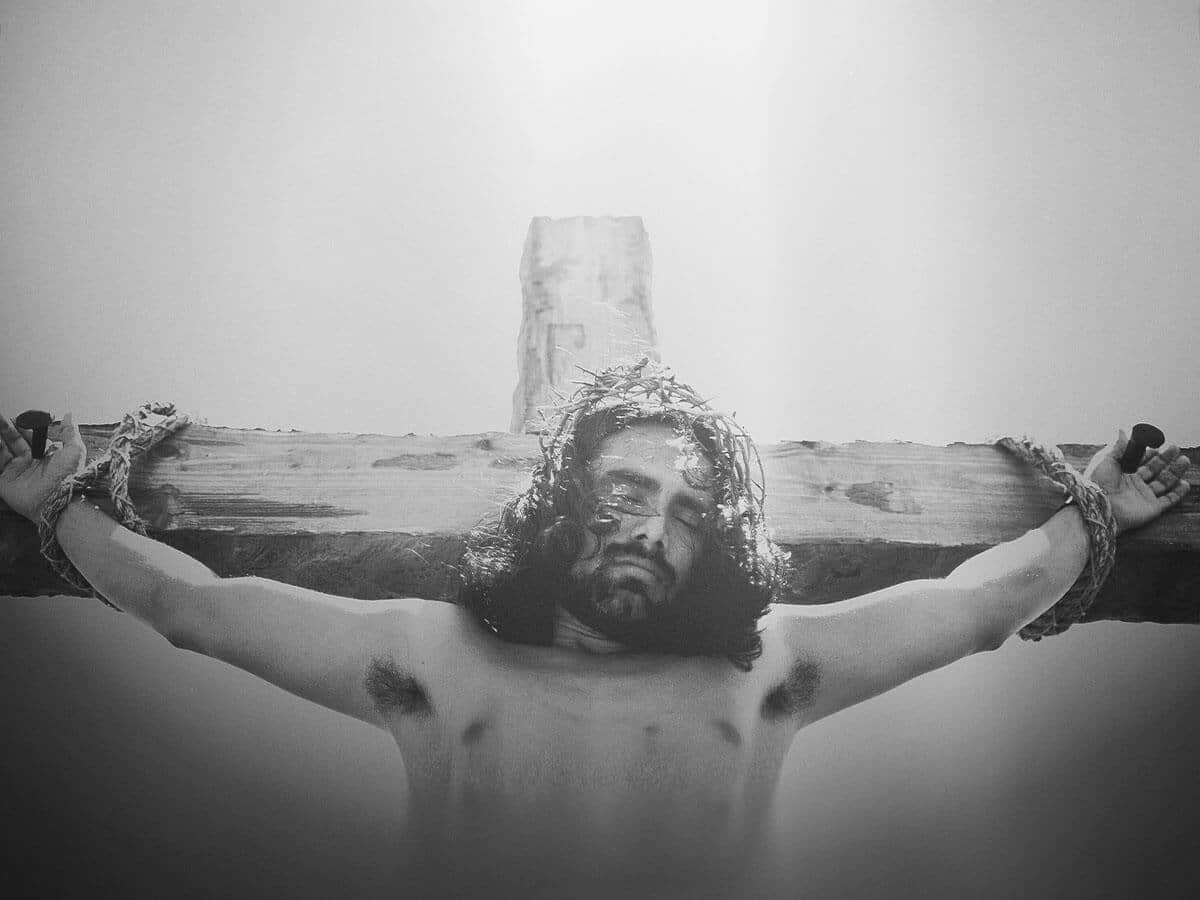
Atheist: Which is why, when the Romans nailed you to a cross, nobody came to save you and your last words were, "My God, My God, why hast thou forsaken me?"


Jesus: Into thy hands I commend my spirit.


Atheist: And then you died.


Jesus: But I rose again.


Atheist: And are in heaven.


Jesus: In my father's house are many mansions.  I go there to prepare a place for you.


Atheist: I'll bet you do.  


Jesus: Ye shall see me standing on the right hand of the father.


Atheist: So when are you coming back?


Jesus: No man knoweth but the father.


Atheist: Soon, though, right?


Jesus: Behold, I come quickly!


Atheist: I can't wait.


Jesus: Every eye shall see.


Atheist: So it hasn't happened yet.


Jesus: Every knee shall bow.


Atheist: Good luck with that.


Quick Reply
Cancel
2 years ago  ::  Nov 04, 2010 - 7:43PM #2
Wolfhoundgrowl
Posts: 82

Very good Bill.

Quick Reply
Cancel
1 year ago  ::  Mar 22, 2011 - 11:13PM #3
Silkandsteel
Posts: 6

This is an old thread but I can't resist.


Oct 30, 2010 -- 10:47AM, BillThinks4Himself wrote:


Jesus: Behold, I come quickly!


That sounded oddly like an innuendo

Quick Reply
Cancel
1 year ago  ::  Mar 27, 2011 - 3:11AM #4
Kinky.christian
Posts: 262

LOL 


Actually I think Jesus likes atheists. In fact I think he likes most atheists a lot more than he likes many people who label themselves Christians.


Quick Reply
Cancel
1 year ago  ::  Mar 29, 2011 - 4:31PM #5
Nonchristianheaven
Posts: 147

That is so funny.


Quick Reply
Cancel
1 year ago  ::  Apr 01, 2011 - 12:04AM #6
Silkandsteel
Posts: 6

Mar 27, 2011 -- 3:11AM, Kinky.christian wrote:


Actually I think Jesus likes atheists. In fact I think he likes most atheists a lot more than he likes many people who label themselves Christians.


How do you figure that?

Quick Reply
Cancel
1 year ago  ::  Apr 01, 2011 - 11:08AM #7
mountain_man
Posts: 27,986

Apr 1, 2011 -- 12:04AM, Silkandsteel wrote:

Mar 27, 2011 -- 3:11AM, Kinky.christian wrote:

Actually I think Jesus likes atheists. In fact I think he likes most atheists a lot more than he likes many people who label themselves Christians.


How do you figure that?


Easy. Just make it up. Since this Jesus character never existed you can make up anything you want and claim that's what he said or feels. That's what the whole christian religion is based on; making up stuff about Jesus and pretending it's true.

Dave - Just a Man in the Mountains.

I am a Humanist. I believe in a rational philosophy of life, informed by science, inspired by art, and motivated by a desire to do good for its own sake and not by an expectation of a reward or fear of punishment in an afterlife.
Quick Reply
Cancel
1 year ago  ::  Apr 16, 2011 - 10:54AM #8
BillThinks4Himself
Posts: 2,990

Apr 1, 2011 -- 11:08AM, mountain_man wrote:


Apr 1, 2011 -- 12:04AM, Silkandsteel wrote:

Mar 27, 2011 -- 3:11AM, Kinky.christian wrote:

Actually I think Jesus likes atheists. In fact I think he likes most atheists a lot more than he likes many people who label themselves Christians.


How do you figure that?


Easy. Just make it up. Since this Jesus character never existed you can make up anything you want and claim that's what he said or feels. That's what the whole christian religion is based on; making up stuff about Jesus and pretending it's true.


The question of who Jesus was, if he was ever anybody, is an interesting one.  He was supposed to be the Jewish Messiah - rejected by the Jews - but there's no evidence to back that up.  The Gospels were written at least three decades after Jesus's death.  Half of the New Testament is written by Paul, who never met Jesus except in his visions.  The four gospels cannot be "eye-witness accounts" since they not only contradict each other but present assertions that their authors could not have witnessed.  For example, neither Matthew, the publican, nor John Mark, nor Luke, the physician, nor John, the Beloved, could have "witnessed" some of the events depicted in the New Testament.  They weren't there for the virgin birth or for conversations had between Mary and Elizabeth during the Jesus-and-John Wonder Years.  They couldn't account for conversations they were not privy to - such as Jesus's encounter with the devil, Jesus's prayer in Gethsemane (while his disciples slept) or Jesus's encounter with Caiaphas (while his disciples had fled).  


If these are not four "eye-witness accounts," then they're four rival versions of the authoritative message, each with its own twist.  While Matthew, Mark and Luke show an evolutionary development (extending from Mark to Matthew to Luke), Matthew and Luke both quote the so-called "Q Gospel" (a common source other than Mark) indicating that we don't even have all the links in this evolutionary process.


In the meantime, what we have is a story that feels borrowed from so many others, one has to wonder if there's a nucleus to it that's actually original.  For someone who was supposed to be the Messiah, the great defender of Israel, Jesus strangely has nothing good to say of his own people.  He never criticizes the Romans but spends almost every breath criticizing the Jews.  His enemies are the Pharisees, but Jesus's style is that of a Pharisee and his most famous assertion - that the entire law can be reduced to two commandments: love God and love your neighbor - isn't his.  It belongs to a Pharisee who lived before him: the legendary Rabbi Hillel.  


The beat goes on.  Jesus's betrayal, including a conspiring Sanhedrin, or Jewish senate, tracks back to the story of Julius Caesar (as does the virgin birth, which is reminiscent of Mars' impregnation of a vestal virgin).  Herod's slaughter of the innocents - in his attempt to kill Jesus - is just a retelling of Moses's near-death experience at the hand of Pharaoh, which would explain why a slaughter that never happened made its way into Matthew.  The need to be Moses would also explain Jesus's "Sermon on the Mount," despite the absence of an available "mount," a defect Luke resolves with his "Sermon on the Plain."  Jesus's prayer - that this "cup" pass from him - makes little sense within a Jewish context, since Jews didn't drink the "bitter cup" of hemlock administered to the condemned among the Greeks.  It does, however, imitate the story of Socrates, who freely gave his life - and became a martyr - by literally drinking the "bitter cup" of hemlock.  Unlike Socrates, Jesus stands mute at his own trial, but prior to his capture, he both confronts his pharasaic rivals, and is confronted by them, by the trained use of the so-called Socratic Method of tactical questioning.  And whereas Socrates cleverly denied knowing anything (using his "ignorance" as a pretext to question rival authorities), Jesus evaded a rival's Socratic attack by refusing to allow himself to be called "good master," arguing that none should be called good but God.


Jesus's titles, "Son of God" and "King of Kings and Lord of Lords," track back to imperial figures like Alexander the Great and Augustus Caesar.  His coterie of disciples tracks back to Socrates, which helps explain why so many of his disciples have Greek names.  An historically inaccurate Roman census, where everybody has to go back to the city of their ancestors (something the Romans never required) puts his birth in Bethlehem, the birthplace of King David, who was also chased by a sitting king (Saul) who feared being replaced.  It's so important that Jesus have a Davidic lineage that Matthew and Luke set up rival genealogies, which can't agree on which son of David to link to as Jesus's remote ancestor.  


Even within the gospels, the Jesus movement is awkwardly shown to replicate the rise and fall of John the Baptist whose "voice in the wilderness," camel's hair garbs and diet of locusts and wild honey are a throw-back to the Old Testament prophet Elijah.  Just as Elijah gave the prophetic mantel to his disciple and successor, Elisha, John is depicted as giving his blessing to Jesus.  The value of this association helps explain the otherwise un-wise reference to a storyline similar to that of Jesus, but preceding it.  


One has to wonder why the gospel writers would admit to the existence of a prior movement just like Jesus's - where its prophetic figure preached repentance, baptized converts, drew disciples, got into fights with the Pharisees and was arrested and executed when he brought the movement to Jerusalem.  That would be like Muhammad's disciples admitting that Muhammad had been preceded by a lesser known prophet who had claimed to have found an angel in a cave.  Jesus - whose dying words, "My God, My God, why hast thou forsaken me" are cribbed from the book of Psalms - actually benefits from the reminder that his story is a tad familiar to John's.  It's a parallel Luke embellishes by creating a Smallville/Wonder Years connection, not just between Jesus and John as boys but between their mothers, Mary and Elizabeth (who both have miraculous conceptions and hang out to discuss them).  


The gospel writers actually go out of their way to draw this connection - as derivative as it may be - for strategic reasons that are just as compelling: Jesus's death (and his failure to save the Jewish nation) must be explained.  If Jesus was not only the promised Jewish messiah but literally God in human form, how could the Romans have killed him?  Why, after being raised from the dead, didn't Jesus wipe the Romans out?  Why, after his Jonah-like three days in the belly of the whale, doesn't Jesus finish the job?  Why does he instead ascend to Heaven leaving his disciples to be hunted down and Jerusalem to be invaded, the temple (his "father's house") razed and his people scattered?  What value would he have as a "messiah" if he couldn't save himself, let alone his own people?  The answer lies in the need to justify Jesus's failure, which is worth the risk of exposing him as derivative.  The gospel writers don't mind admitting to an appropriation of elements - from one prophetic story to another - because doing so helps sell the end result.  Yes, before there was  Jesus, there was John.  Yes, the idea of preaching repentance and the Kingdom of Heaven was John's.  Yes, the idea of preaching in the desert was John's.  Yes, there were already disciples and baptisms.  Yes, there was already this other feud with the Pharisees.  Yes, there was already an arrest and an unexpected execution - leaving the movement stunned and without an obvious next step.


But that's the point.  Jesus, the "King of Kings, Lord of Lords," "Son of Man," "Son of God" and messianic defender of Israel, was unceremoniously snuffed by the Romans.  He didn't come back to save his people.  At best, the "empty tomb" allowed his disciples to say he had escaped death and ascended to Heaven, but the messiah was still gone, abandoning his people to an upcoming slaughter far worse than the "abomination of desolation" visited upon Jerusalem at the end of the Maccabean revolt.  This unprecedented failure had to be given a pretty face.  One way to make the argument was to say that Jesus was just following in the footsteps of John.  As he told his disciples, "It is enough for the disciple to be as his master."  By making Jesus a disciple of John, and by having John suffer an ignominious end - unlike Elijah, who successfully dodged King Ahab and then went to Heaven on a chariot of fire - Jesus's demise could be explained by comparing it to John's.  As John's demise set the stage for Jesus, Jesus's demise set the stage for his disciples, who were then arrested and martyred in turn.


Such spectacular failures are conspicuously un-Biblical.  Abraham defeated his enemies, rescuing Lot from the Battle of the Kings.  Moses parted the Red Sea and brought Israel to the Promised Land, even if he died on the other side of Jordan.  David defeated Israel's enemies and established Israel's settlement of Canaan, even if he moral problems of his own.  Who would have honored Abraham if he'd died childless?  Who would have cared about Moses if the Israelites had been slaughtered on the western shores of the Red Sea?  Who would have honored David if his forces had been defeated by the Philistines, or if he had fallen before Goliath?  The heroes of the Old Testament were men who got the job done.  The Jewish view of Jesus, as a skid mark left behind by a Roman army that was just getting warmed up, illustrates the nature of the challenge.


If anything, the death of Jesus - and his failure to save Israel - falls under a different set of patterns.  If tales of inevitable success form the national myth marking success as anything but a fluke (Israel is "God's chosen people") later defeats would be explained as a kind of divine chastening.  Israel, God's "son," would be whipped and chastened for its sins - the way Moses was kept out of the promised land for striking the rock, the way David would be humbled for his abuses of power.  At least half of the Old Testament is dedicated to rationalizing how "God's chosen people" could be b-slapped by the Assyrians, the Babylonians, the Persians and the Ptolemies of Egypt.  How could "God's son" become a whipping boy, enslaved to idolatrous nations?  The answer - according to Isaiah, Jeremiah, Ezekiel and the rest - was a sinful downfall.  Given a choice between blaming their God, denying their God and blaming themselves, the Jews blamed themselves.  Their failure to maintain the old ways had done them in.


But by the time we get to Jesus, various attempts had been made to purify the nation.  All of the ritualistic puritanism of the Pharisees - as depicted in the Gospels - reflected the same attitude attributed to John: "Repent for the Kingdom of Heaven is at hand."  If such a mantra was repeated over and over in Israel - much like Gerald Ford's W.I.N. pins ("Whip Inflation Now") - it was the hoodoo voodoo every society goes through as it clutches its tokens and tikis ever tighter in the vain attempt to hustle a turnaround by uttering the sacred prayer.  As the drought continues or the occupation stands, cries of "God is great" can only work for so long before morale reaches a breaking point.  The birth of every new religion comes at the death of another.  If rain dances and drum banging did anything, there'd be no need to reinvent the "old time religion."


But when magic stops working, things get awfully desperate.  Virgins get sacrificed.  Scapegoats are named.  Every new trick is trotted out until the floods - or fires - come anyway.  And when they do, whole cities are left to be swallowed up - by jungle or sand.  Survival requires the creation of a new god, a new prophet, a new religion.


In the Christian tradition, the unprecedented slaughter of the Jewish Revolt (66-70 A.D.) came about as a direct result of Israel's rejection of Jesus.  In the Gospels, Jesus cries out: 


html_removed


"37O Jerusalem, Jerusalem, thou that killest the prophets, and stonest them which are sent unto thee, how often would I have gathered thy children together, even as a hen gathereth her chickens under her wings, and ye would not! 38Behold, your house is left unto you desolate. 39For I say unto you, Ye shall not see me henceforth, till ye shall say, Blessed is he that cometh in the name of the Lord." (Matthew 23:37-39, King James Version)


In the Gospels, the death of Jesus produces an earthquake that rends the veil of the Jewish temple, an act symbolic of Israel's impending doom - some three decades later.  The actual razing of the Jewish temple was not the result of seismic activity or divine displeasure but one of the last steps in the Roman invasion of Jerusalem.  The breaching of its walls was an elimination of the city's last decent stronghold, symbolic of the Roman victory.  Jesus's "abomination of desolation" speech, in Matthew 24, befits the siege of Jerusalem, where food supplies were cut off and anybody fleeing the city was crucified - with as many as 500 crucifixions carried out each day.  In the midst of a falling Jewish sky, there were betrayals and supposed betrayals, with anyone advocating surrender perceived as traitors and fed to the Zealots and Sicarii.  The Gospels, which were written during and after these nightmarish times, are practically Shakespearean in their attempt to reduce the horror and disillusionment to a simple, symbolic narrative.  


If Gone with the Wind was about the Great Depression and Titanic was about the end of the Reagan Revolution (and the fears of the early 90s that America had become an "unsinkable ship" run smack straight into an iceberg), the Gospels are the story of how the Jews must have brought their own destruction upon themselves.  The various Gospels are snapshots of how the story was modifed and updated to tell and sell this operatic tale to a wider and wider audience.  This Jewish King Lear attributes the disaster to a greedy, stiffnecked people who would not "render unto Caesar," and whose nuttiness led them to kill a Jewish Gandhi.  Jesus represents "the good Jews" whose call to "turn the other cheek," "love your enemies," and "go the extra mile" - by urging surrender and compromise - were slaughtered in the civil war that followed as Jewish zealots executed perceived "traitors" in their midst.  Such persecuted dissidents are to be found in any society under siege, and such tales are common.


The gospels reflect a Roman, rather than Jewish, perspective.  When I say, "Roman," I am speaking of the Roman side of the conflict.  The Gospels, like the rest of the New Testament, were written in Greek.  It was, in fact, a series of tensions between the Jews and the Greeks among them, that resulted in the Battle of Beth Horon in 66 A.D.  The spark that ignited the fire was an uproar over Greek sacrifices of birds out in front of a Jewish synagogue in Caesarea.  When the commander of the local garrison proved indifferent to Jewish protests (much like Pontius Pilate in the Gospels), the Romans were caught off guard by protests that led to a sudden uprising.  Attacks on Roman citizens and Jews who were considered Roman sympathizers resulted in military action, on the part of the Roman garrison, but the Romans got the worst of it as they moved through the city.  This sudden turning of tables encouraged other Jewish communities to join in, forcing the Romans to go on the defensive.  Agrippa II was forced to flee to Galilee while Cestius Gallus marched on Rome.  Gallus's forces stalled at the Temple Mount, forcing him to retreat to the coast.  Along the way, he was ambushed at the narrow pass of Beth Horon, where he took heavy losses.


It was the kind of defeat (the loss of an entire legion) that would be, for the Romans, an equivalent to the American 9/11, justifying an all-out, take-no-prisoners, no-holds-barred slaughter of the bad guys.  The tale that came out of it - a kind of tragic prequel - would paint the Romans with white hats and zealous Jews with black hats.  In the telling of this tale, Roman sympathizers would be the noble savage, the noble Jew, worth saving and defending.  If you look at the Hebrew scriptures cited in the Gospels - as proof that Jesus was the messiah the Jews should have listened to - they show a studied familiarity with the Greek version of the Jewish scriptures.  On the other hand, they also show a very un-Jewish reading of them, as if someone with a very different agenda had meticulously gone through the text looking for passages the way a lawyer goes through a contract looking for loopholes.


To read Matthew with your eyes half open, you'd think the Romans had been in charge of Judaea throughout the life of Christ, but that's a misleading assumption.  While Roman claim to the greater area went back to Pompey's conquest in 63 B.C., the Romans didn't maintain direct control of the area until 63 A.D., three years before the Jewish Revolt and three decades after the "death of Christ."  Throughout what would have been the life and times of Jesus, the area was under control of the Herodian dynastry, a group of Edomites who had converted to Judaism under the reign of the Hasmoneans (Maccabees).  While the original Herod the Great had gotten the Romans to elect him "King of the Jews," neither Herod nor his family of incompetent and brutal f-ups were well liked.  Herod the Great was known, on the one hand, for his extensive architectural projects, including the Second Temple.  On the other hand, Herodian intrigues over power would make MacBeth blush (and then vomit).  In 4 B.C., when Herod died, his "kingdom" was turned into a tetrarchy, ruled by his three sons.  As far as Jesus was concerned, the two who mattered were Archelaus (whose holdings included Judea) and Antipas (whose holdings included Galilee).


Antipas (Antipater) ruled Galilee continuously during the entirety of Jesus's life.  While he was mostly devoted to building projects, the Gospels name him as the king who took offense to John the Baptist's denunciation for divorcing his current wife to marry his brother's wife.  According to the Gospels, he had John arrested, then beheaded, though the blame is shifted to his daughter-in-law, Salome.  The gospels also have Jesus sent to him by Pontius Pilate, because of Jesus's status as a Galilean.  When Jesus fails to entertain him, he mocks him and sends him back to Pilate.


Archelaus, who ruled over Judea, had a shorter stint as tetrarch.  Faced with an early challenge by the Pharisees, he reacted brutally and quickly gained a reputation for cruelty.  In 6 A.D., he was deposed and replaced by a direct Roman prefect, possibly Pontius Pilate.  While the Gospels make Pilate the voice of reason, attempting more than once to avoid having to execute Jesus, contemporary accounts describe Pilate as cruel and antagonistic, provoking several near-uprisings.


Herodian intrigues should have directed most anger toward the Herodians, with the Romans being blamed for supporting them.  In the case of Pilate, however, various stunts - ranging from insensitivity to outright cruelty - could have provoked a very heated relationship, particularly in Judea.  While Pilate ruled from Caesaria, not Jerusalem, the power play between himself and Caiaphas, chief priest, could have set the stage for political tensions between them.  The direct rule of a Roman prefect - particularly a cruel one - might have raised tensions in Judea.

Quick Reply
Cancel
1 year ago  ::  Apr 16, 2011 - 11:22AM #9
mountain_man
Posts: 27,986

Apr 16, 2011 -- 10:54AM, BillThinks4Himself wrote:

The question of who Jesus was, if he was ever anybody, is an interesting one. ...


I'm sorry. I just can't work up much interest in Jesus. I'm not a christian so the content of the bible is meaningless to me. Even if Jesus did exist that does not mean the stories about him in the bible are true and certainly the miracles are made up. So, why bother?

Dave - Just a Man in the Mountains.

I am a Humanist. I believe in a rational philosophy of life, informed by science, inspired by art, and motivated by a desire to do good for its own sake and not by an expectation of a reward or fear of punishment in an afterlife.
Quick Reply
Cancel
1 year ago  ::  Apr 16, 2011 - 3:43PM #10
JCarlin
Posts: 3,077

To deal with your second comment first, all good inspirational preaching is a compilation of the "best that is out there" perhaps with a personal twist emphasizing one aspect, in the case of Jesus the humanistic components of the "best." 


As to the first Ockham's Razor says that the the "Q" Gospel is in fact an eyewitness oral history at least of the adult life of Jesus.  The social conventions of the times indicate that this eyewitness was a female companion, which of course could not be admitted by the male dominated religious leaders and wannabes.  The Gospel of Mary suggests who this female companion might have been. 


As for all the God and Messiah stuff, simply fluff to pump up a human charismatic preacher who had a considerable appeal to the commoners but not to the Priesthood.  Paul needed the charisma for his Christ, and Jesus was a convenient candidate.  Relatively unknown unlike Hillel or Mithra and malleable for Paul's top down theology. 


Apr 16, 2011 -- 10:54AM, BillThinks4Himself wrote:

If these are not four "eye-witness accounts," then they're four rival versions of the authoritative message, each with its own twist.  While Matthew, Mark and Luke show an evolutionary development (extending from Mark to Matthew to Luke), Matthew and Luke both quote the so-called "Q Gospel" (a common source other than Mark) indicating that we don't even have all the links in this evolutionary process.


In the meantime, what we have is a story that feels borrowed from so many others, one has to wonder if there's a nucleus to it that's actually original.


J'Carlin
If the shoe doesn't fit, don't cram your foot in it and complain.
Quick Reply
Cancel
Page 1 of 2  •  1 2 Next
Post Reply
 
    Viewing this thread :: 0 registered and 1 guest
    No registered users viewing
    Advertisement

    Beliefnet On Facebook