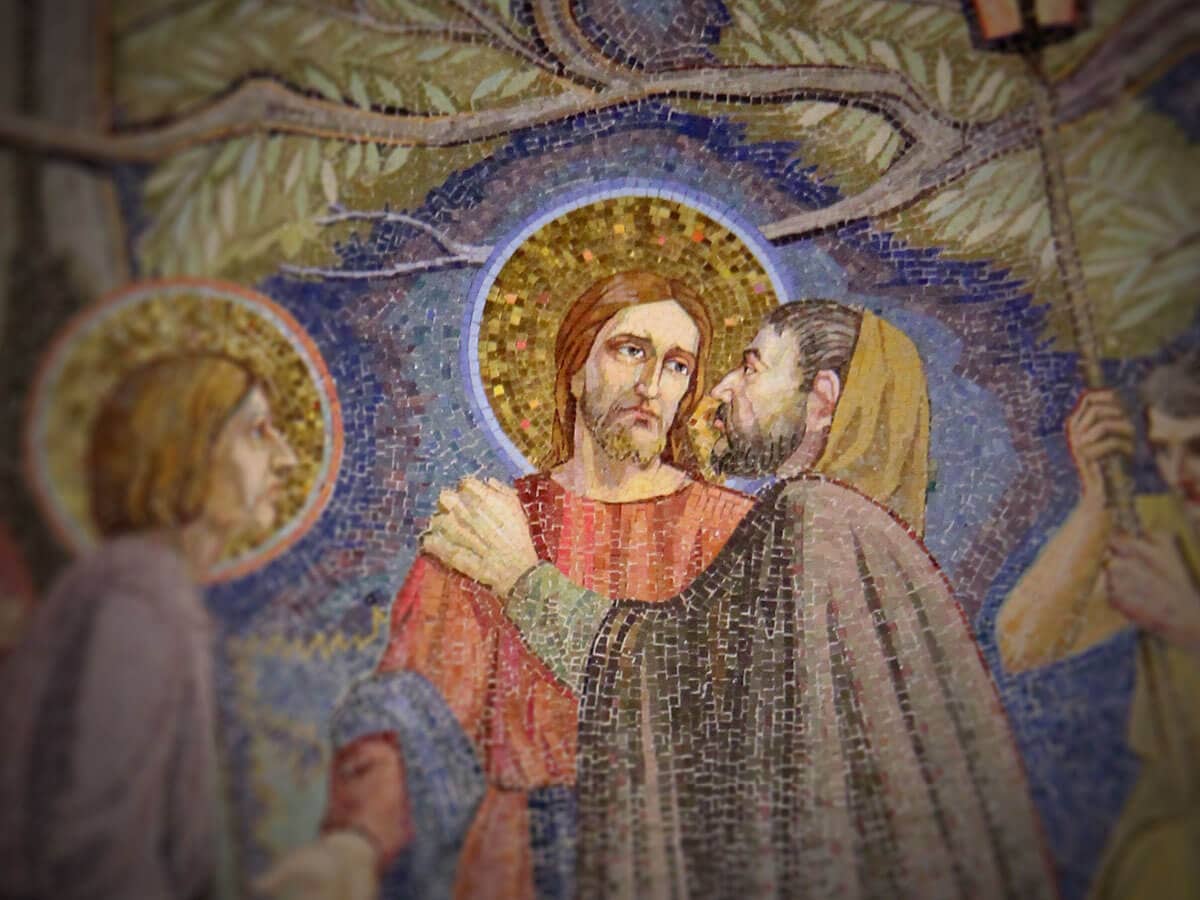
Pentecost: The Rushing, Visible, Transforming Power and Presence of God

    Tuesday, May 21, 2013, 4:31 PM [General]

    “When the day of Pentecost came, they were all together in one place. Suddenly a sound like the blowing of a violent wind came from heaven and filled the whole house where they were sitting. They saw what seemed to be tongues of fire that separated and came to rest on each of them. All of them were filled with the Holy Spirit and began to speak in other tongues as the Spirit enabled them.. –Acts 2:1-4 (NIV)

    Many doubters of God’s existence have said, or written, “If there is a God, why isn’t the existence of such a Being obvious to everyone? Why isn’t God’s existence and presence completely obvious and beyond question or dispute? Why is there so much mystery and uncertainly about whether or not there is a God? Why does God make humanity struggle in order to know Him?”
    One day, many, many years ago in a temple in Jerusalem (a temple visited by people of different languages from throughout that region), God’s presence was visible and obvious to everyone present. Those who witness this “happening” had different views of what went on that day. Some said those impacted by the Undisputed Presence were simply drunks, even though it was only 9 am. After all, there is nothing to stop someone from getting drunk at 9 am if that is what is wanted. Others were amazed, beyond words, and had no explanation of what they witnessed. Still others proclaimed they’d witnessed a unique appearance of God.
    No one today need struggle to know of God’s existence and presence. A simple prayer of “God, I want to know you and I want to experience you as the Creator and Sustainer of my life. Show me your presence, tell me what you want me to know, speak to my heart and I will listen” will bring an immediate response to anyone who honestly prays this prayer.
    Because something happened a long time ago does not diminish that event’s significance.
    Most amazing about the events of Pentecost is the permanent change which occurred in those who experienced God’s presence resting on them on that day. This (somewhat) motley crew of individuals  were transformed from former fugitives into bold spokespersons who challenged the powers of their day by teaching and telling of God’s closeness, God’s love, and God’s call to repentance and righteousness.
    The “old selves” died, new selves were born, and they changed their world. The followers (later called apostles) encountered and overcame strong opposition, constant persecution, ostracism, and outright rejection. Their impact was positive and permanent. They gave up much of what they had to follow a path unmarked, unplanned (by them), and unpredictable. They were honored of and loved by God. The contradictions in their experiences are endless.
    Are we certain we want to experience God in this way? Encountering God close up and in-person leaves no room for backing out or backing away. Is this what we truly seek?
    (c)2013  Deborah Evans
    0 (0 Ratings)

    Peace That Passing Understanding? Yes, It's Possible

    Tuesday, May 14, 2013, 1:52 PM [General]


    Paul, the first century apostle, wrote to early Christians that if they did certain things, the peace of God would guard their hearts and minds in Christ Jesus.

    What does this mean, and is this available to everyone? What were the certain things that had to be done in order to get and maintain this special peace?

    Rejoice in the Lord always. I will say it again: Rejoice!F)">  Let your gentleness be evident to all. The Lord is near.G)">  Do not be anxious about anything,H)"> but in every situation, by prayer and petition, with thanksgiving, present your requests to God. And the peace of God,J)"> which transcends all understanding,K)"> will guard your hearts and your minds in Christ Jesus."  (Phillipians 4:4-7)

    Paul tells those reading or listening to the reading of his letter to do the following things:


    1) Rejoice in the Lord, always. Do not be jealous, resentful, or envious of anyone, regardless of appearances and circumstances. Rejoice in the Lord by re-membering and re-counting God's kindness and blessings. List and remind yourself of the good things done on your behalf by God, or at the very least, the bad things kept out of your path by God. Write these things down, sing them, pray them, speak them. That's what rejoicing in the Lord means.


    2)  Let your gentleness be evident to all.  Why? Because the Lord is near. The Lord is not only near to you, the Lord is near to all creation and all creatures. God's work may not be evident in the life of everyone, but let God's work be evident in you! Yes, you can afford to relax and be gentle. Because the Lord is near, you do not have to fear that your gentleness will be used against you--to harm or to disadvantage you. You can afford to breathe deeply and live gently. The Lord is near, keeping guard and keeping watch and guaranteeing good outcomes for you.


    3)  Because you have presented your needs and requests to God with a spirit of thanksgiving, you can leave anxiety behind. Your ability to leave anxiety behind is totally dependent upon you and God, not upon what other people do or choose not to do. What a relief!  By turning your concerns over to God in a spirit of thankful prayer, you are not longer depending upon the whims of others to have a peaceful life. Regardless of what others do, God can lift you higher!


    When you have done 1), 2), and 3) listed above, you are ready and open to see and accept the peace that transcends, or passes, all understanding.


    You are no longer responsible for struggling and straining to "be peaceful." God transfuses His peace into your heart and into your mind. This transfusion of peace guards you from becoming overwhelmed with the anxieties and fears that stalk all of us unless we turn them over to God and leave them there.


    This is not a one-time, done-for-all process. Actually, it will become a way of life and the only way to live as you practice living with a joyful knowledge of God's goodness, gently acknowledging God's nearness, and leaving all of your problems on His doorstep. Allow His peace to rush into you, freeing you, increasing your knowledge, and making you a faithful witness of His goodness and His greatness.

    (c) 2013  Deborah Evans

    From: Paravanes:Meditations


    0 (0 Ratings)

    Estranged From A Family Member? It's Not Always A Bad Thing

    Tuesday, April 23, 2013, 11:03 AM [General]


    Are you estranged from a family member, or feel on the verge of becoming estranged from a family member? Do you feel it's time to put real and feel-able space between yourself and a family member?

    Are you tired of trying to adjust to a family member's anger, dysfunction, or endless drama? Are you dealing with a family member who always promises to change, but can't or won't follow through? Are you tired of crying over hurts inflicted by someone who is related to you and you feel should love you? How long have you tried to change someone who isn't motivated to change?

    Have you spent too much time (only you know how long is "too much time") praying for a family member to change in a way that will make it easier, or possible, for you to get along with them and spend time with them free of arguing, extreme stress, and frustration? Are you measuring love based on how much time you can spend happily with someone? Are you feeling pressured to adjust to something that's wrong, immoral, or dangerous?

    It's not always a bad thing to put space between yourself and someone who generates too much negativity, lack of safety, or disrespect.

    In Matthew 10:36, Jesus warned his listeners how enemies may be found in one's own household: "a man's enemies will be members of his own household."

    Was Jesus quoting Micah 7: 5-7 when he said these words? Here is the passage from Micah: "Do not trust a neighbor; put no confidence in a friend. Even with the woman who lies in your embrace, guard the words of your lips. For a son dishonors his father, a daughter rises up against her mother, a daughter-in-law against her mother-in-law--a man's enemies are the members of his own household."

    I am always leery of people who claim to have formulas for handling situations like this. I offer no such formulas. Some things can only be known through prayer, listening, and step-by-step obedience.

    We should always hope for and welcome honest, truthful reconciliation when it's possible. It's not always possible.

    It's OK to know and accept what's not possible and trust God to lead us in the right path.
    (c) 2013 Deborah Evans
    From: Paravanes: Meditations
    0 (0 Ratings)

    The Boston Bombings: Madness and Meaning

    Wednesday, April 17, 2013, 5:50 PM [General]

    On tax deadline day, someone hid bombs near the finish line of the Boston Marathon. The bombs exploded, killing three people and severely wounding many, many more. The investigation continues at all levels of law enforcement.

    Those are some of the facts, but it’s maddening that these clear words have been used over and over in news reports to summarize a truth that is founded in someone’s madness, in someone’s evil thinking and evil deeds.

    The madness of the bomber or bombers makes clear (as if we needed more clarity!) that no corner of our Earth is free from the deadly madness that some call insanity, others call terrorism, and some call sin.

    What is the meaning in all of this?

    Christians should resist the temptation to try to explain these horrific events in a context of “why God allows things like this to happen.” Honestly, not one of us really knows why God allows things like this to happen. We should stop saying, suggesting, or implying we know. We don’t know. We should not feel under any obligation to explain what happened in Boston in Monday. We can’t explain it, and we need to be honest enough to say so.

    Not knowing does not invalidate our faith. Those who love God have numerous accounts of how God’s love has been and expressed in their lives. Those accounts remain true, even after the bombings.

    We can take some meaning from these types of events.

    It’s not enough to say: “Well, these types of events happen often in other countries. Why should we be exempt from attacks happening here?” No matter where bombs are exploding and killing innocent civilians, the pain totals in the world have risen. That’s a bad thing and should never become a benchmark of anything worth knowing.


    Image is from madisonvpf.org

    We can pray for those who live and for those who have died. We can pray for the physicians, nurses, responders, and others who are working or have worked with the injured and fallen. We can lift those who remain in loving prayer and ask God to comfort their hearts and give them direction to grieve, mourn, and rebuild their lives.

    We can remember this world offers no place of total safety. The battle against evil is real and lasts as long as we walk the Earth. The joys we find in life must be treasured fully.

    We can accept the times we live in as less stable and more unpredictable than many of us ever dreamed. We can’t go back to the pre 9/11 world in which the oceans protected North America from military attacks. That world is gone forever, because just as we have become wiser and stronger, so have our enemies.

    We must accept that many who live in the United States are unnaturally angry against the government, against those unlike themselves, against any effort or movement that brings different types of people together. All foes are not overseas speaking languages most of us don’t know.

    We can remember what it’s so easy to forget: we get a little time in this life, and then we move beyond. We did not choose the time of our coming into the world, and most of us will not choose the time of our departure. We can only choose how we will spend the years in between. We can commit ourselves to wise choices, to wisely using the time, energy, and resources given to us by God.

    We can know and experience God with us. God is with us in the actions and words of those who love us, who encourage us, who care for us. In a way we cannot always define, God is with us, present in a mysteriously real way that cannot be imitated or explained away.

    In all of life’s experiences, God holds out open arms, ready to love us and ready to receive us—now and always.
     
    (c)2013 Deborah Evans


    0 (0 Ratings)

    Reflections on a Father's Passing -- Eleven Years Later

    Saturday, April 6, 2013, 11:43 AM [General]

    My father died eleven years ago, on April 5, 2002.
    It was a staggering loss for me, because although I grew up with both of my parents in our home, my mother had been ill with multiple sclerosis for many years of that period. (She died the following year, in 2003). As a result of my mother’s illness, my father often played the double, “two parents in one body” role.
    To help me process his passing, I started what I called a “grief workbook”, a small blank book in which I wrote memories, feelings about his death, poetry, and into which I also pasted published proverbs, poems, etc. related to grief and parental death. Having that little book helped me immensely, and I often referred back to it to measure my progress in adapting to the loss of my father.
    Last Friday, April 5th, I went back to my little book and was amazed at how deep the grief was, how hard it was for me to envision a world without my father, and how much I struggled to get through the basic routines of daily life.
    Coming through to the other side of pain and grief taught me many lessons. I offer you a few of them…
    From my grief workbook, entry dated April 5, 2013:
    “As I have spent time this evening reading through this little volume, I am feeling gratitude and gratefulness and grace.
    Life has changed so much since the years when Pop--my father’s nickname in our family-- was here. Some of those changes have been experienced as loss and pain. Others have been experienced as incredible spiritual heights and the widening and deepening of my entire life experience.
    The pain and losses refined me. They strengthened me for the new challenges and opportunities that awaited me. Without the growth that arose from absorbing and managing the pain and losses, I would not have been prepared to move forward, nor would I have been able to sustain my forward movement on new horizons.
    The pain gave me an emotional freedom, an independence that helped me rely more fully on God and on my own character and my own life’s purpose. I became less dependent on  ”good” circumstances and the approval of others to make me happy. I learned through experience how to live without those things. I realized God could show me joy in any situation.
    I also realize how living and moving forward through and beyond the pain gives me credibility and authority when I speak with others about God and God’s goodness. I can give specific, real, and compelling testimony of God’s love and power in every situation. When I speak of these things, I am not repeating someone else’s story. I am telling my own story. Nothing is more powerful and nothing is more honest.
    Pop was a good example for me in so many ways. I am sure his life did not end in the time, place, or way he’d anticipated as a younger man. Still, he went through it all with grace, and that expression of God’s grace in my father has remained the most inspirational showing of God’s power I have ever witnessed.
    For me, his legacy points to a life well lived and a finish worthy of emulation.”
    0 (0 Ratings)

    Page 1 of 23  •  1 2 3 4 5 6 ... 23 Next